
Risk surface
Ocean rates & capacity
Trans-Pacific and Asia–Europe pricing, blank sailings, peak-season carryover.
-
 Ocean Rates Were Supposed to Ease After Peak Season. Instead, Asia-U.S. Prices Are Staying High.
New mid-September benchmarks from Drewry and Xeneta show Asia-U.S. container rates still holding at unusually high levels, with East Coast pricing above $10,000 and capacity con...
Ocean Rates Were Supposed to Ease After Peak Season. Instead, Asia-U.S. Prices Are Staying High.
New mid-September benchmarks from Drewry and Xeneta show Asia-U.S. container rates still holding at unusually high levels, with East Coast pricing above $10,000 and capacity con...
-
 Asia-Europe Ocean Rates Are Softening as Suez Returns—but Booking Risk Is Still High
Asia-Europe container rates are falling as more carriers restore Suez and Red Sea transits, adding effective capacity back into the trade. But new WiseTech data and carrier advi...
Asia-Europe Ocean Rates Are Softening as Suez Returns—but Booking Risk Is Still High
Asia-Europe container rates are falling as more carriers restore Suez and Red Sea transits, adding effective capacity back into the trade. But new WiseTech data and carrier advi...
-
 More Asia–Europe Services Are Returning to Suez, but the Red Sea Transition Is Getting Riskier
Maersk and Hapag-Lloyd’s Gemini network is moving further back into Suez on Asia–Europe services, but active Red Sea security advisories and signs of riskier back-haul use mean ...
More Asia–Europe Services Are Returning to Suez, but the Red Sea Transition Is Getting Riskier
Maersk and Hapag-Lloyd’s Gemini network is moving further back into Suez on Asia–Europe services, but active Red Sea security advisories and signs of riskier back-haul use mean ...
-
 Shippers Are Challenging the Return to Suez—And That Could Keep Red Sea Freight Planning Unstable
A new shipper-side challenge to renewed Suez and Red Sea transits suggests the restart is entering a credibility phase, with cargo owners questioning whether carriers have provi...
Shippers Are Challenging the Return to Suez—And That Could Keep Red Sea Freight Planning Unstable
A new shipper-side challenge to renewed Suez and Red Sea transits suggests the restart is entering a credibility phase, with cargo owners questioning whether carriers have provi...
-
 Record July Container Volumes Are Hitting a Constrained Network—and Reliability May Be the Bigger Q4 Risk
A record 17.3 million TEUs moved globally in July 2026, but weakening schedule reliability, rising empty repositioning, and ongoing Panama Canal constraints suggest the bigger Q...
Record July Container Volumes Are Hitting a Constrained Network—and Reliability May Be the Bigger Q4 Risk
A record 17.3 million TEUs moved globally in July 2026, but weakening schedule reliability, rising empty repositioning, and ongoing Panama Canal constraints suggest the bigger Q...
-
 Panama Draft Limits and China Typhoon Delays Are Forcing Service Changes on U.S. East Coast Routes
Panama Canal draft restrictions and late-August typhoon disruption at Shanghai and Ningbo are now forcing schedule adjustments on Asia–U.S. East Coast container services, increa...
Panama Draft Limits and China Typhoon Delays Are Forcing Service Changes on U.S. East Coast Routes
Panama Canal draft restrictions and late-August typhoon disruption at Shanghai and Ningbo are now forcing schedule adjustments on Asia–U.S. East Coast container services, increa...
-
 Red Sea Return Picks Up, but Rising Rates and Jeddah Delays Show the Restart Phase May Be the Bigger Freight Risk
Ocean carriers are expanding selective Red Sea and Suez transits in August 2026, but rising rates, lingering surcharges, and Jeddah congestion show that reopening the corridor i...
Red Sea Return Picks Up, but Rising Rates and Jeddah Delays Show the Restart Phase May Be the Bigger Freight Risk
Ocean carriers are expanding selective Red Sea and Suez transits in August 2026, but rising rates, lingering surcharges, and Jeddah congestion show that reopening the corridor i...
-
 Global Shipping Chokepoints Are Multiplying Again—and the Freight Risk Now Extends Well Beyond Hormuz
A fresh wave of chokepoint stress is broadening freight risk beyond the Strait of Hormuz, with Panama Canal draft limits, Rhine low water, Red Sea security threats, and Black Se...
Global Shipping Chokepoints Are Multiplying Again—and the Freight Risk Now Extends Well Beyond Hormuz
A fresh wave of chokepoint stress is broadening freight risk beyond the Strait of Hormuz, with Panama Canal draft limits, Rhine low water, Red Sea security threats, and Black Se...
-
 Fresh Hormuz Attack Reports Are Now Clogging Jeddah, Creating a New Middle East Freight Risk Beyond the Gulf
A reported August 4 strike on a cargo ship near Oman and tightening controls at Jeddah show Middle East freight disruption spreading from direct Gulf security exposure into cong...
Fresh Hormuz Attack Reports Are Now Clogging Jeddah, Creating a New Middle East Freight Risk Beyond the Gulf
A reported August 4 strike on a cargo ship near Oman and tightening controls at Jeddah show Middle East freight disruption spreading from direct Gulf security exposure into cong...
-
 East Coast Peak Season Is Tightening Fast as Panama Canal Limits and Suez Uncertainty Squeeze Import Capacity
Fresh Panama Canal draft restrictions, new carrier surcharges and unresolved Suez routing changes are making U.S. East Coast import programs more fragile heading into August and...
East Coast Peak Season Is Tightening Fast as Panama Canal Limits and Suez Uncertainty Squeeze Import Capacity
Fresh Panama Canal draft restrictions, new carrier surcharges and unresolved Suez routing changes are making U.S. East Coast import programs more fragile heading into August and...
-
 Heightened CBP Security at U.S. Ports Is Turning Customs Holds Into a New Demurrage Risk for Importers
A July 22, 2026 Journal of Commerce report and related 2026 enforcement signals indicate that tougher CBP scrutiny at U.S. seaports is extending container holds and increasing d...
Heightened CBP Security at U.S. Ports Is Turning Customs Holds Into a New Demurrage Risk for Importers
A July 22, 2026 Journal of Commerce report and related 2026 enforcement signals indicate that tougher CBP scrutiny at U.S. seaports is extending container holds and increasing d...
-
 Truckload Spot Rates Have Moved Above COVID-Era Highs, and July Is Showing the Tight U.S. Freight Market Isn’t Letting Up
Early July freight data suggests U.S. truckload pricing has moved into a broader repricing cycle, with spot rates above prior COVID-era highs, June pricing near record levels, a...
Truckload Spot Rates Have Moved Above COVID-Era Highs, and July Is Showing the Tight U.S. Freight Market Isn’t Letting Up
Early July freight data suggests U.S. truckload pricing has moved into a broader repricing cycle, with spot rates above prior COVID-era highs, June pricing near record levels, a...
-
 A Return to Suez May Be Starting—But the Bigger Freight Risk Is the Transition Back
Selective carrier moves and fresh Suez Canal transits suggest some liner operators are testing a return to the Red Sea corridor after months of Cape diversions. But a July 5 att...
A Return to Suez May Be Starting—But the Bigger Freight Risk Is the Transition Back
Selective carrier moves and fresh Suez Canal transits suggest some liner operators are testing a return to the Red Sea corridor after months of Cape diversions. But a July 5 att...
-
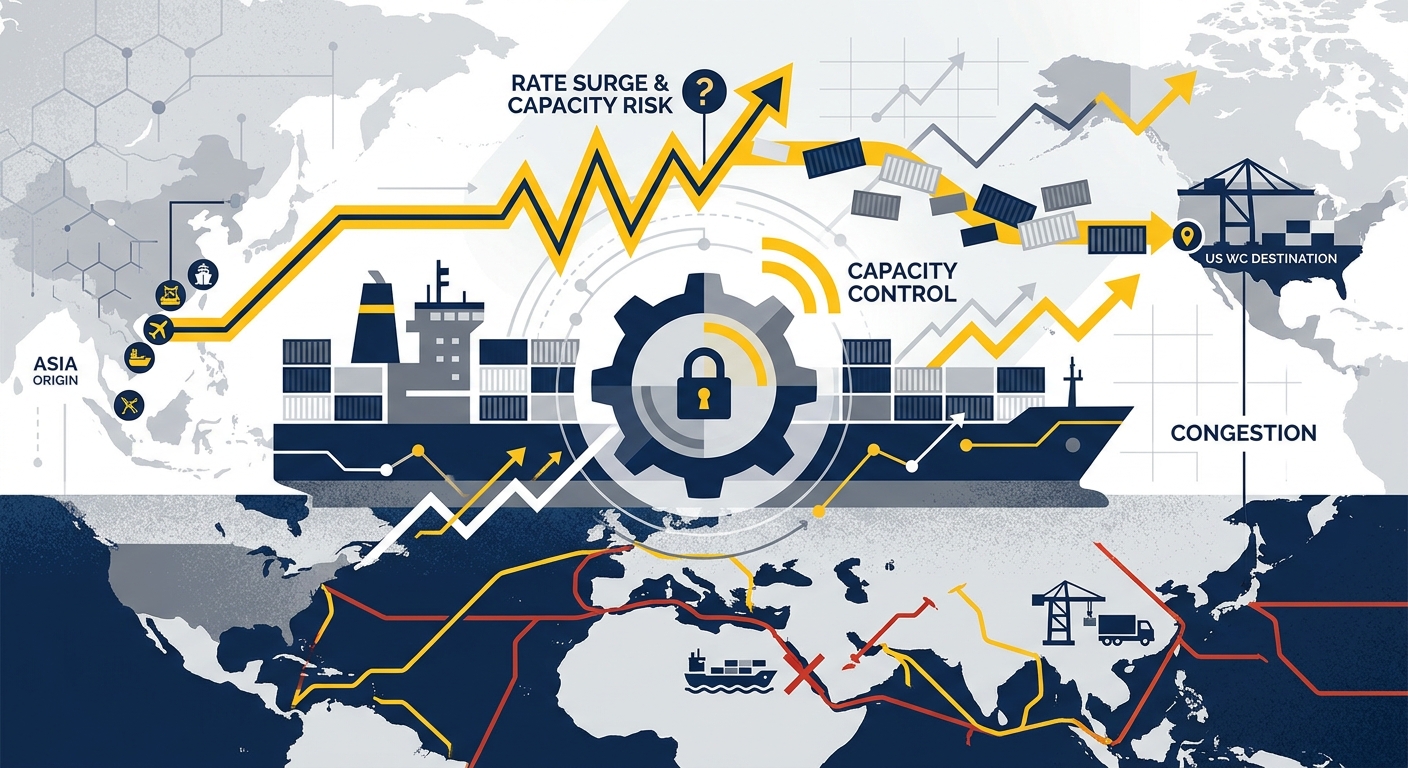 Trans-Pacific Container Rates Have Surged Since March—But the Bigger Story Is Capacity Control, Not a Clean Demand Rebound
Trans-Pacific spot rates rose sharply from March to late June 2026, but the evidence points to a fragile, carrier-managed market rather than a straightforward demand rebound. Ma...
Trans-Pacific Container Rates Have Surged Since March—But the Bigger Story Is Capacity Control, Not a Clean Demand Rebound
Trans-Pacific spot rates rose sharply from March to late June 2026, but the evidence points to a fragile, carrier-managed market rather than a straightforward demand rebound. Ma...
-
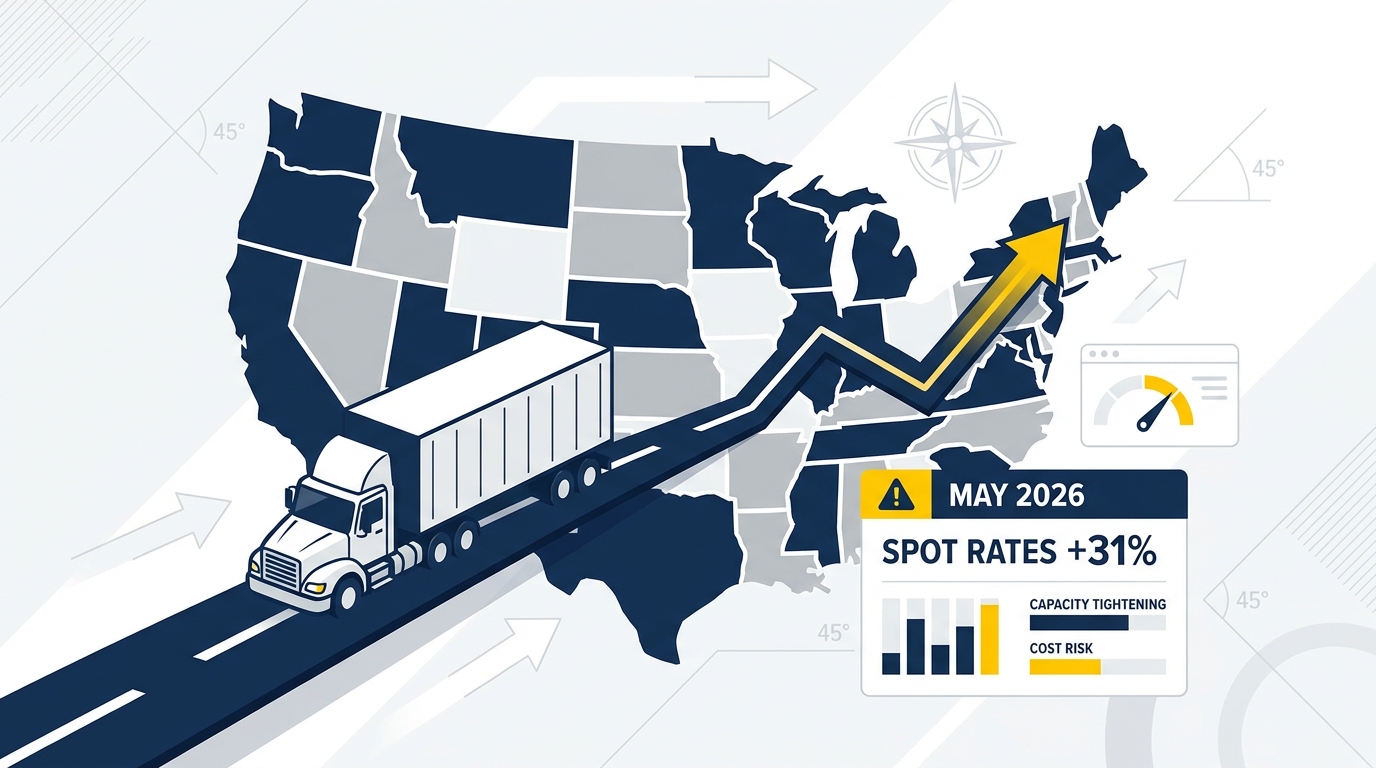 Dry Van Spot Rates Jumped 31% in May, Giving Shippers a Clearer Warning That U.S. Truckload Costs Are Repricing
Late-June market data shows the U.S. truckload cycle has moved from early tightening into more visible repricing. U.S. Bank and DAT reported dry van spot linehaul rates at $2.14...
Dry Van Spot Rates Jumped 31% in May, Giving Shippers a Clearer Warning That U.S. Truckload Costs Are Repricing
Late-June market data shows the U.S. truckload cycle has moved from early tightening into more visible repricing. U.S. Bank and DAT reported dry van spot linehaul rates at $2.14...
-
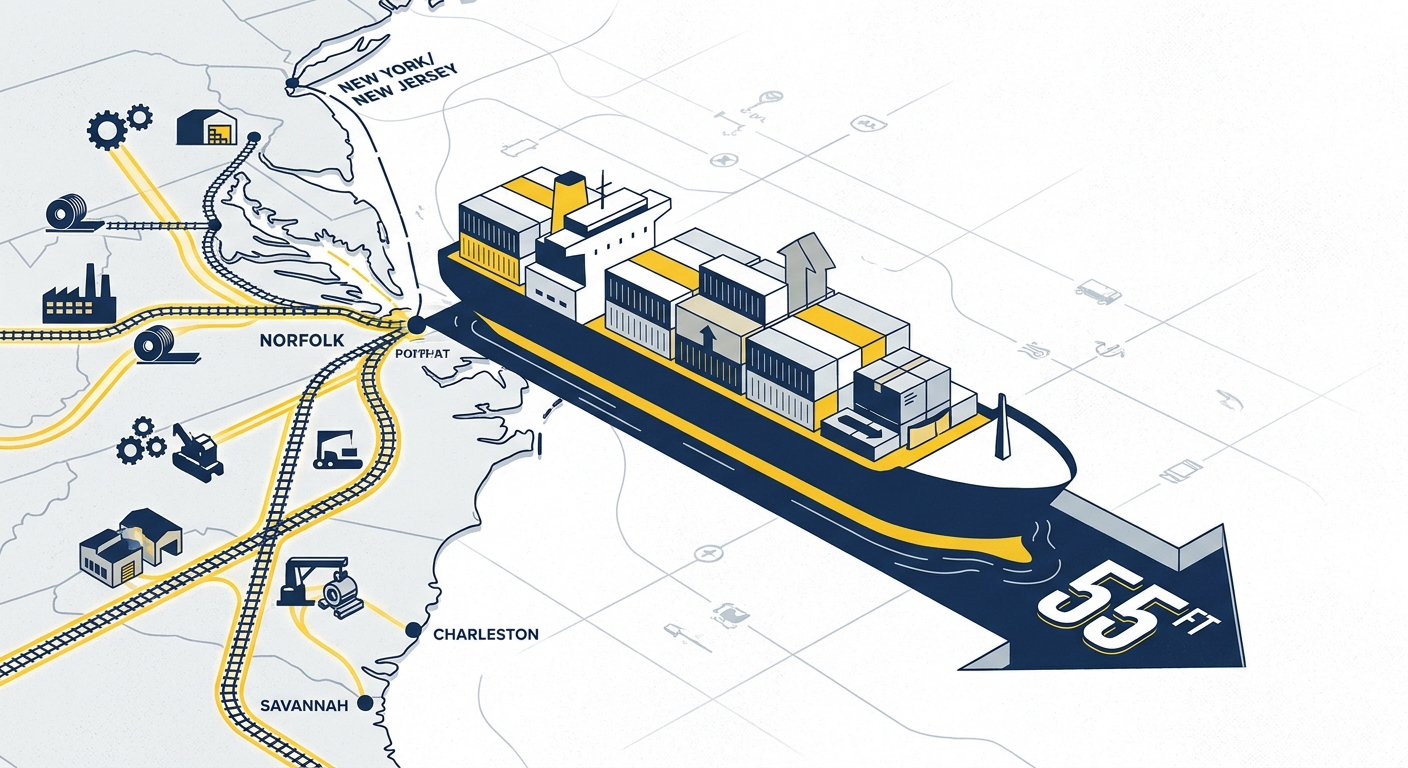 Norfolk’s New 55-Foot Harbor Could Redraw East Coast Freight Routing for Larger Ships and Inland Networks
The Port of Virginia’s newly completed 55-foot Norfolk Harbor removes a key draft constraint in East Coast port competition. The upgrade improves Norfolk’s case for larger, more...
Norfolk’s New 55-Foot Harbor Could Redraw East Coast Freight Routing for Larger Ships and Inland Networks
The Port of Virginia’s newly completed 55-foot Norfolk Harbor removes a key draft constraint in East Coast port competition. The upgrade improves Norfolk’s case for larger, more...
-
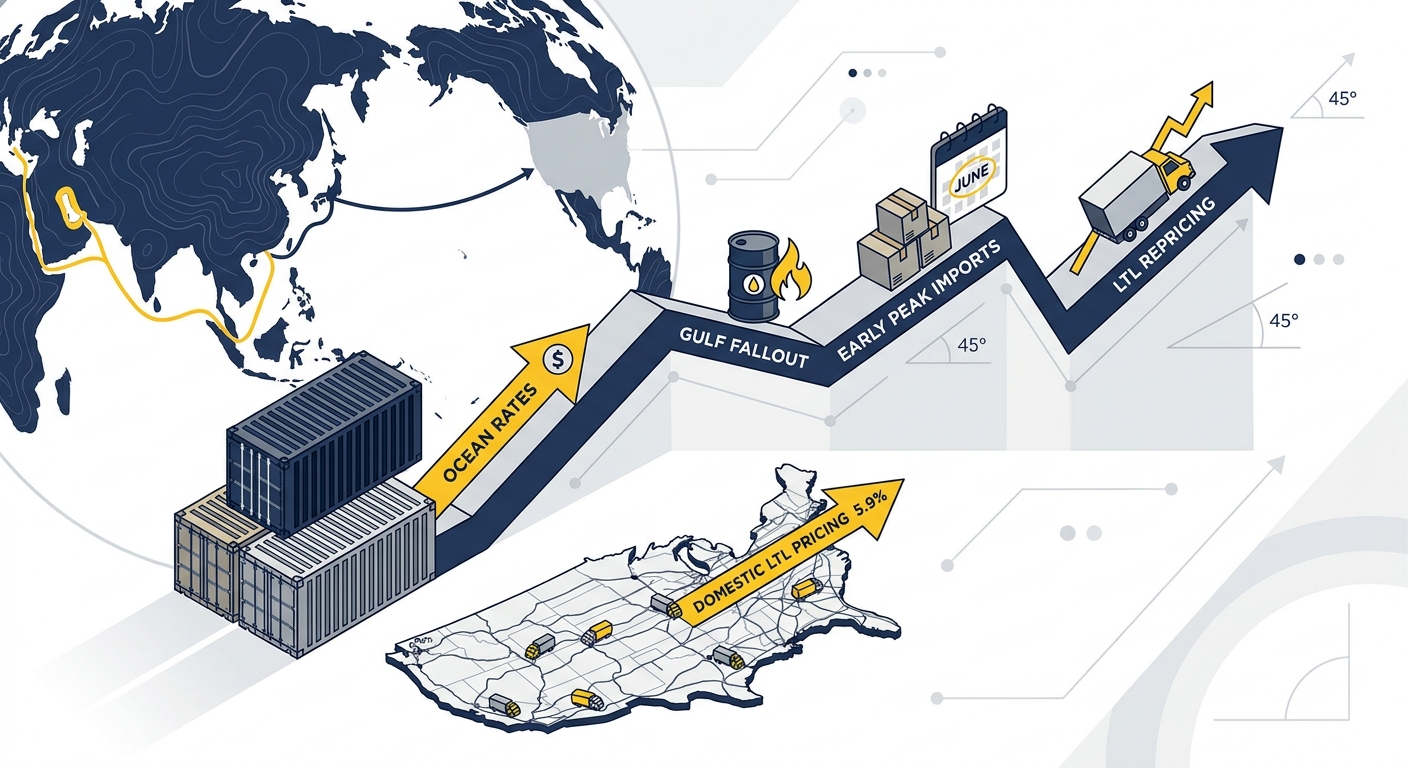 Freight Costs Are Rising Again: Gulf Fallout, Early Peak Imports and LTL Repricing Tighten the June Market
Early June 2026 brought a broader freight repricing cycle as Gulf-related disruption, higher fuel costs, front-loaded import demand and firmer LTL pricing combined to push trans...
Freight Costs Are Rising Again: Gulf Fallout, Early Peak Imports and LTL Repricing Tighten the June Market
Early June 2026 brought a broader freight repricing cycle as Gulf-related disruption, higher fuel costs, front-loaded import demand and firmer LTL pricing combined to push trans...
-
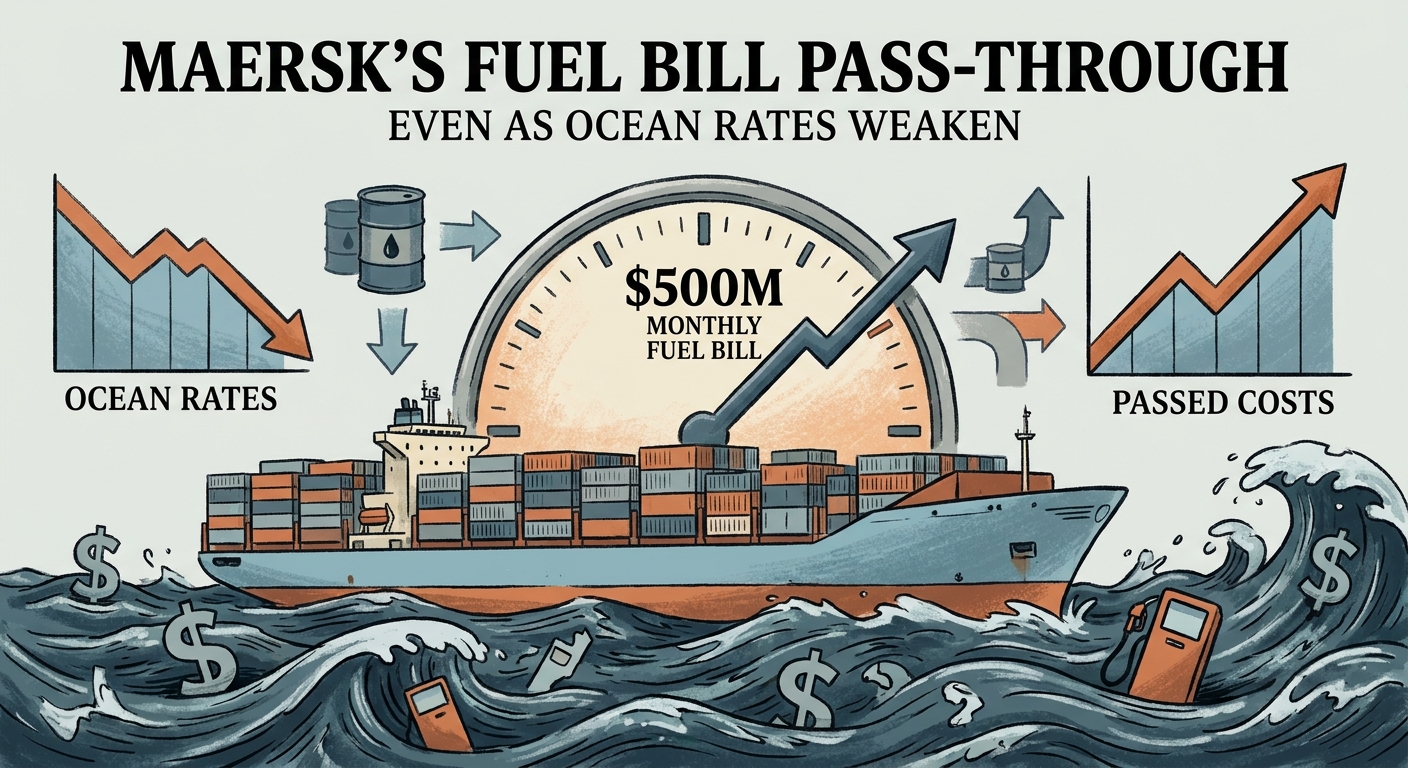 Maersk Says It Is Passing a $500 Million Monthly Fuel Bill to Customers—Even as Weaker Ocean Rates Pressure Profits
Maersk’s May 7 comments and Q1 results suggest the Middle East shipping crisis is no longer just a routing disruption. With the carrier saying it is passing through about $500 m...
Maersk Says It Is Passing a $500 Million Monthly Fuel Bill to Customers—Even as Weaker Ocean Rates Pressure Profits
Maersk’s May 7 comments and Q1 results suggest the Middle East shipping crisis is no longer just a routing disruption. With the carrier saying it is passing through about $500 m...
-
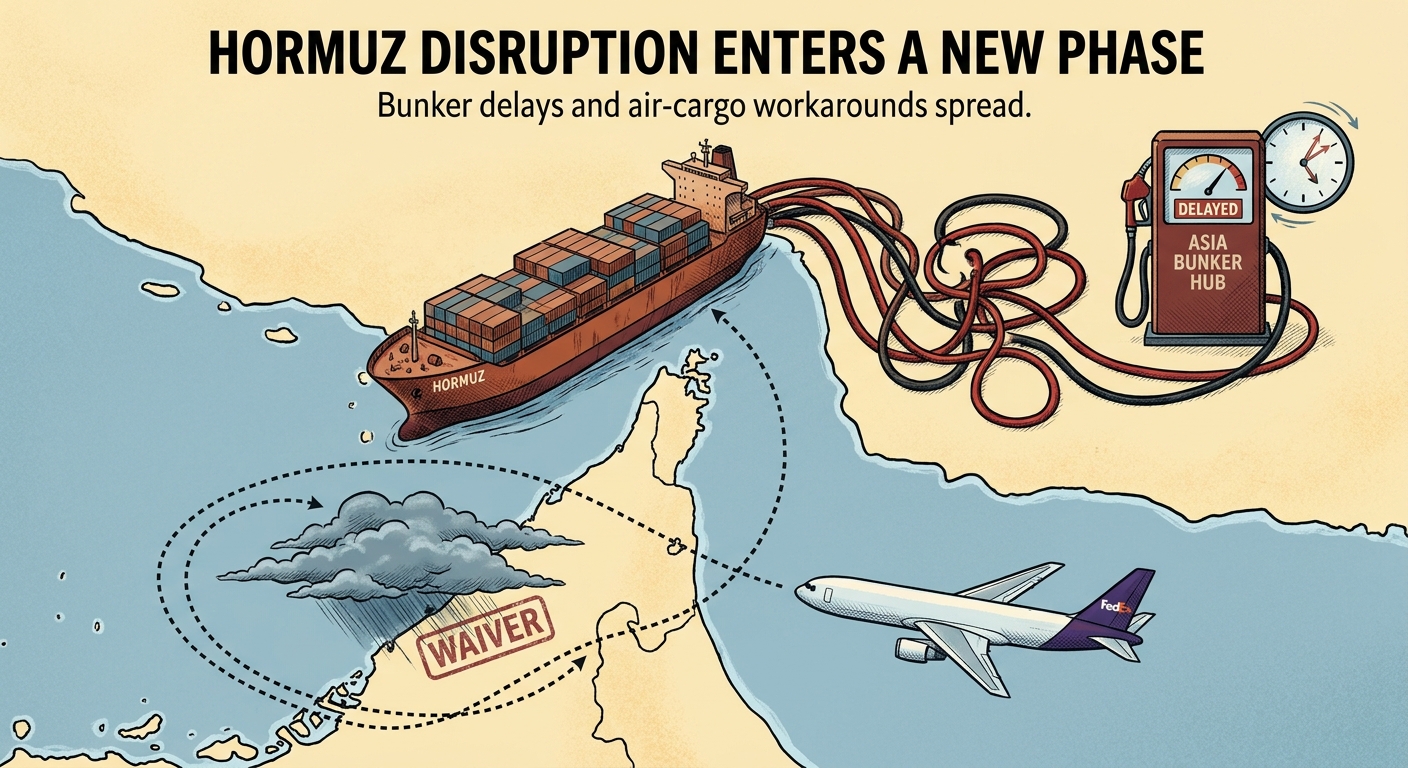 Hormuz Disruption Enters a New Phase as Bunker Delays and Air-Cargo Workarounds Spread
Fresh reporting in early May 2026 suggests the Strait of Hormuz crisis has entered a new operational phase. Maritime attacks and suppressed transit levels are now colliding with...
Hormuz Disruption Enters a New Phase as Bunker Delays and Air-Cargo Workarounds Spread
Fresh reporting in early May 2026 suggests the Strait of Hormuz crisis has entered a new operational phase. Maritime attacks and suppressed transit levels are now colliding with...
-
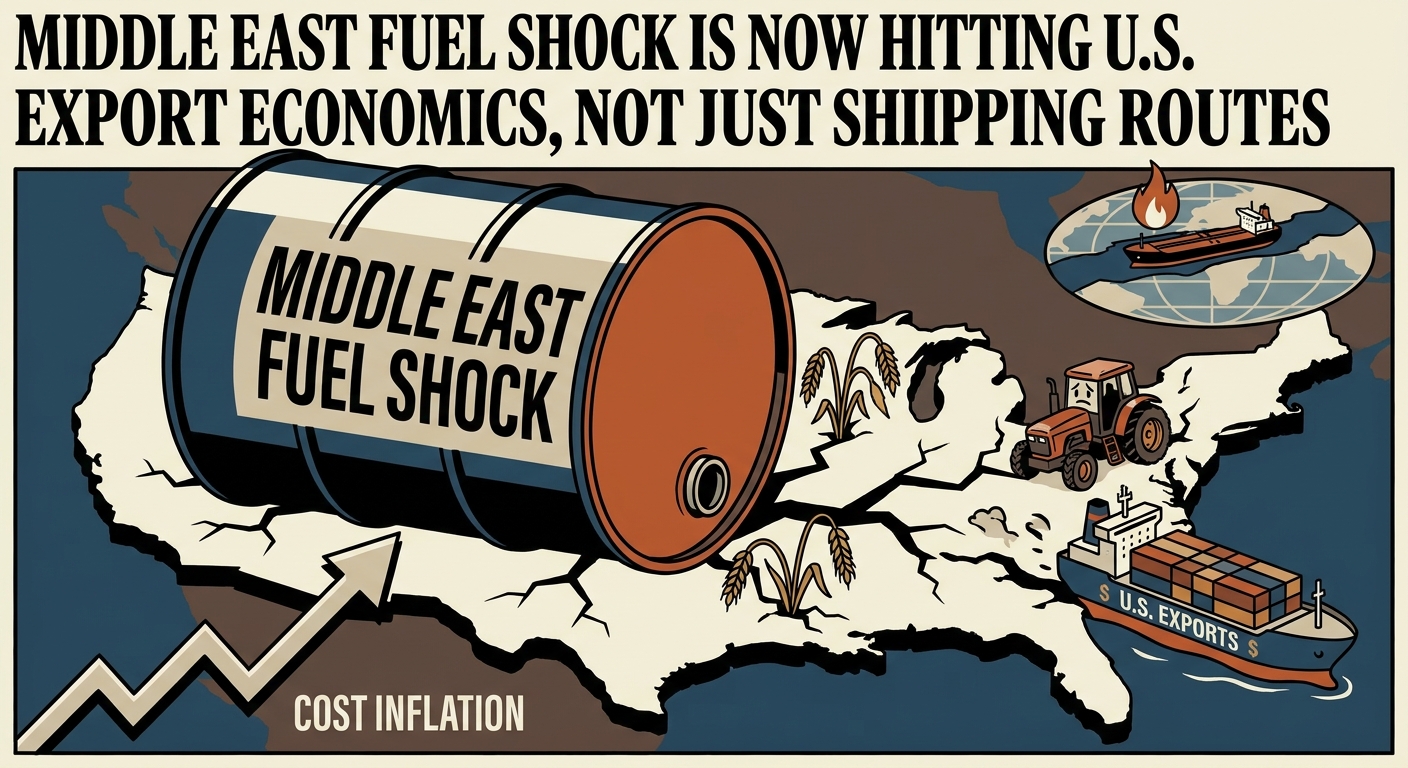 Middle East Fuel Shock Is Now Hitting U.S. Export Economics, Not Just Shipping Routes
The Strait of Hormuz crisis has entered a more commercially painful phase, with bunker surcharges, elevated diesel prices, and gateway congestion now translating into measurable...
Middle East Fuel Shock Is Now Hitting U.S. Export Economics, Not Just Shipping Routes
The Strait of Hormuz crisis has entered a more commercially painful phase, with bunker surcharges, elevated diesel prices, and gateway congestion now translating into measurable...
-
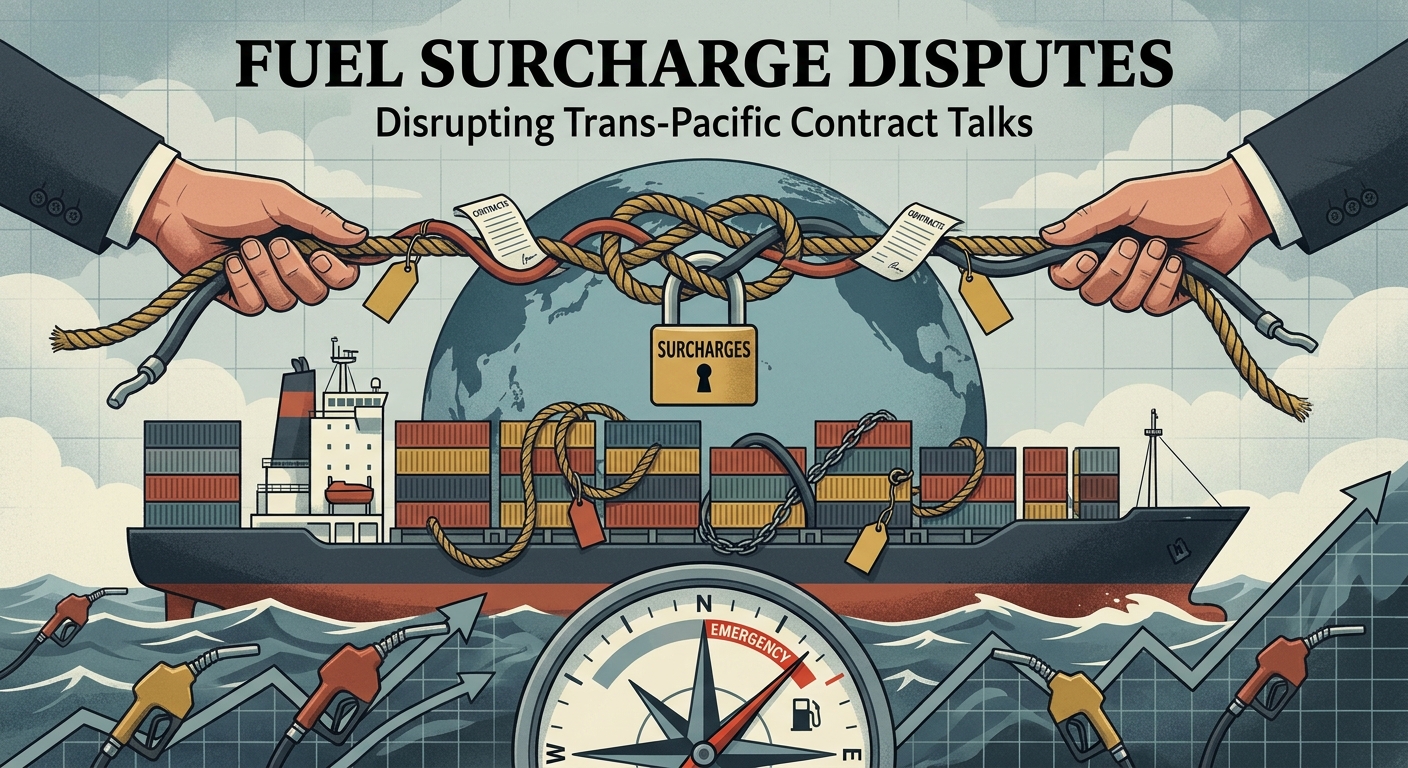 Fuel Surcharge Disputes Are Now Disrupting Trans-Pacific Contract Talks for 2026-27
Ocean carriers' differing use of emergency fuel, bunker, feeder, and inland surcharges is complicating 2026-27 trans-Pacific contract negotiations just as the May 1 benchmark ap...
Fuel Surcharge Disputes Are Now Disrupting Trans-Pacific Contract Talks for 2026-27
Ocean carriers' differing use of emergency fuel, bunker, feeder, and inland surcharges is complicating 2026-27 trans-Pacific contract negotiations just as the May 1 benchmark ap...
-
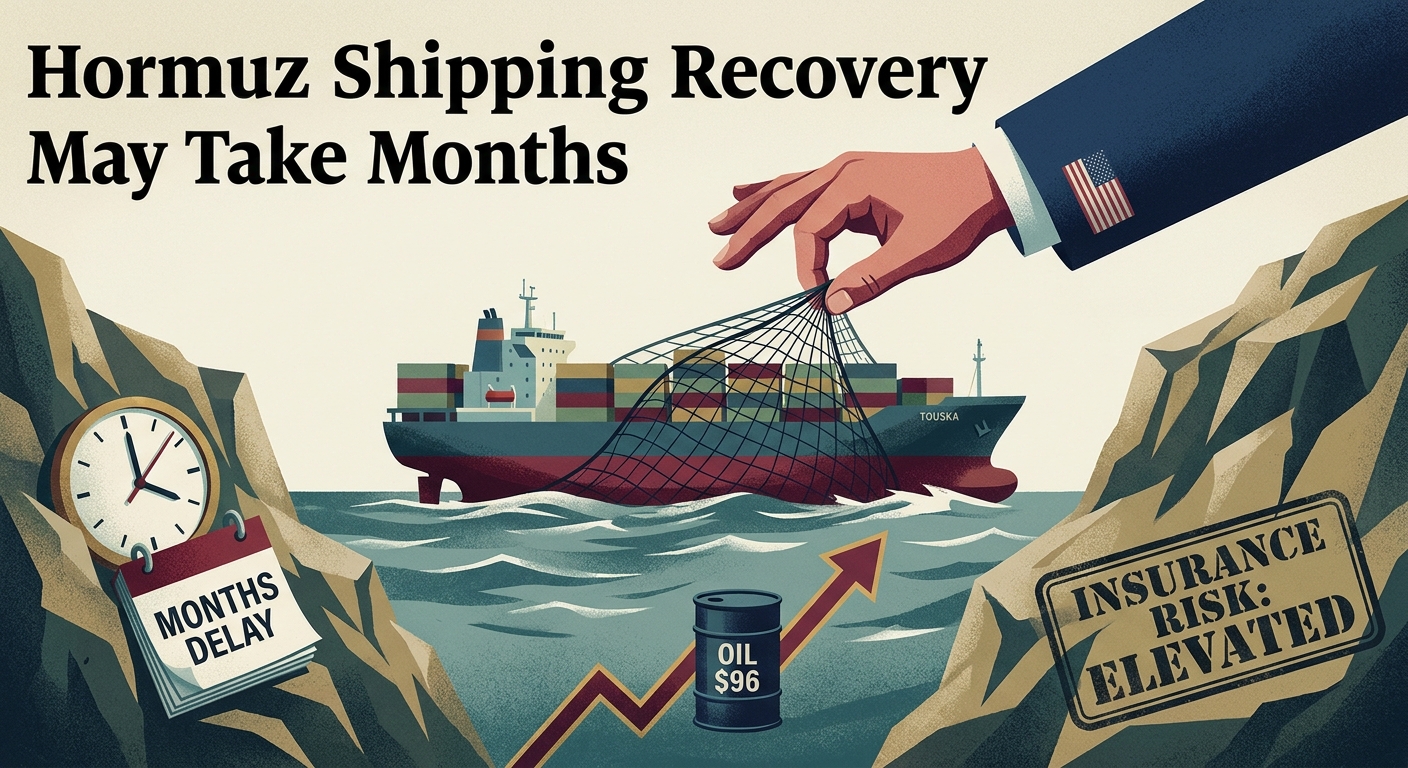 Hormuz Shipping Recovery May Take Months After U.S. Seizes Iranian-Flagged Cargo Ship
A U.S. seizure of an Iranian-flagged cargo ship on April 19-20 has undermined hopes that the April 8 ceasefire would quickly restore normal shipping conditions in the Strait of ...
Hormuz Shipping Recovery May Take Months After U.S. Seizes Iranian-Flagged Cargo Ship
A U.S. seizure of an Iranian-flagged cargo ship on April 19-20 has undermined hopes that the April 8 ceasefire would quickly restore normal shipping conditions in the Strait of ...
-
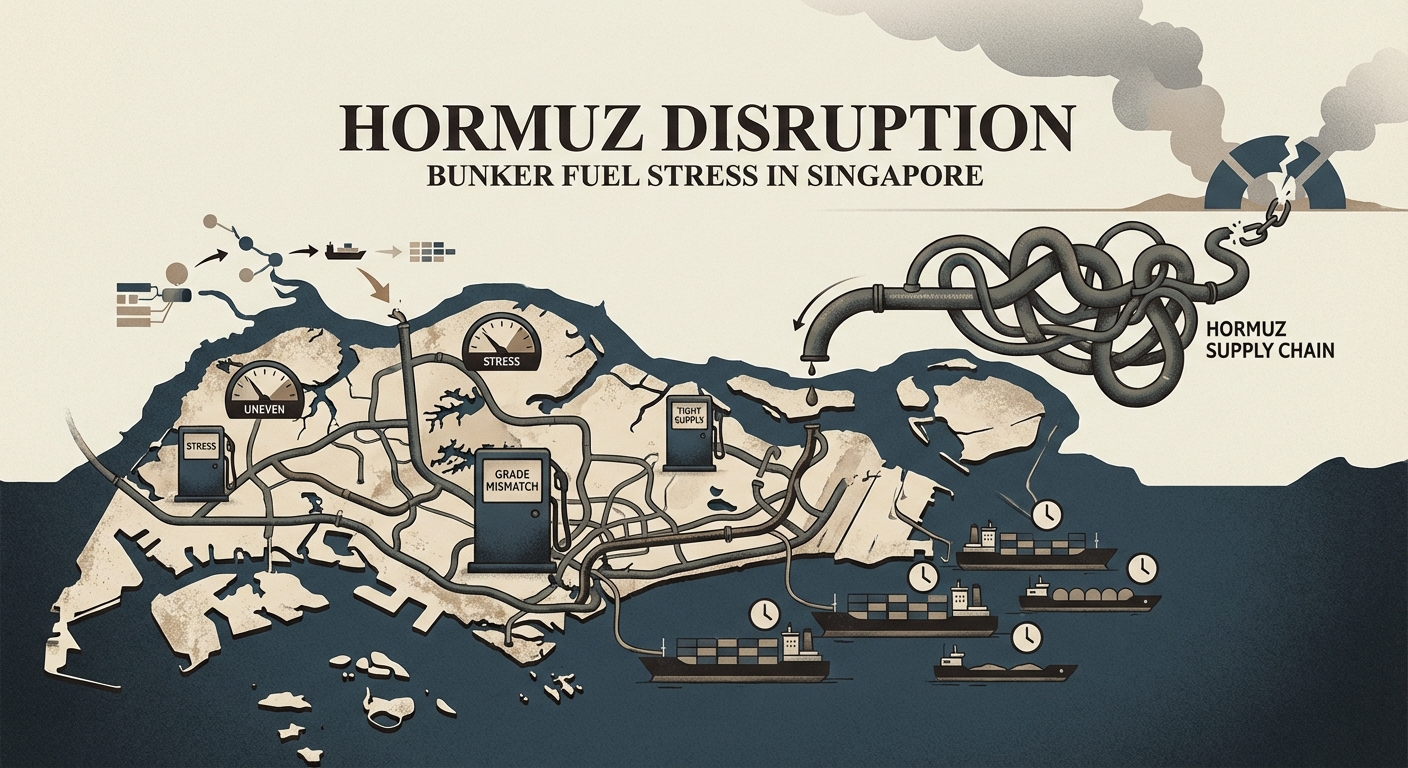 Post-Ceasefire Hormuz Disruption Is Still Hitting Shipping Through Bunker Fuel Stress in Singapore
Even after the April 8 ceasefire, the Strait of Hormuz crisis is still affecting shipping through uneven bunker fuel availability in Asia, especially Singapore. The problem is l...
Post-Ceasefire Hormuz Disruption Is Still Hitting Shipping Through Bunker Fuel Stress in Singapore
Even after the April 8 ceasefire, the Strait of Hormuz crisis is still affecting shipping through uneven bunker fuel availability in Asia, especially Singapore. The problem is l...
-
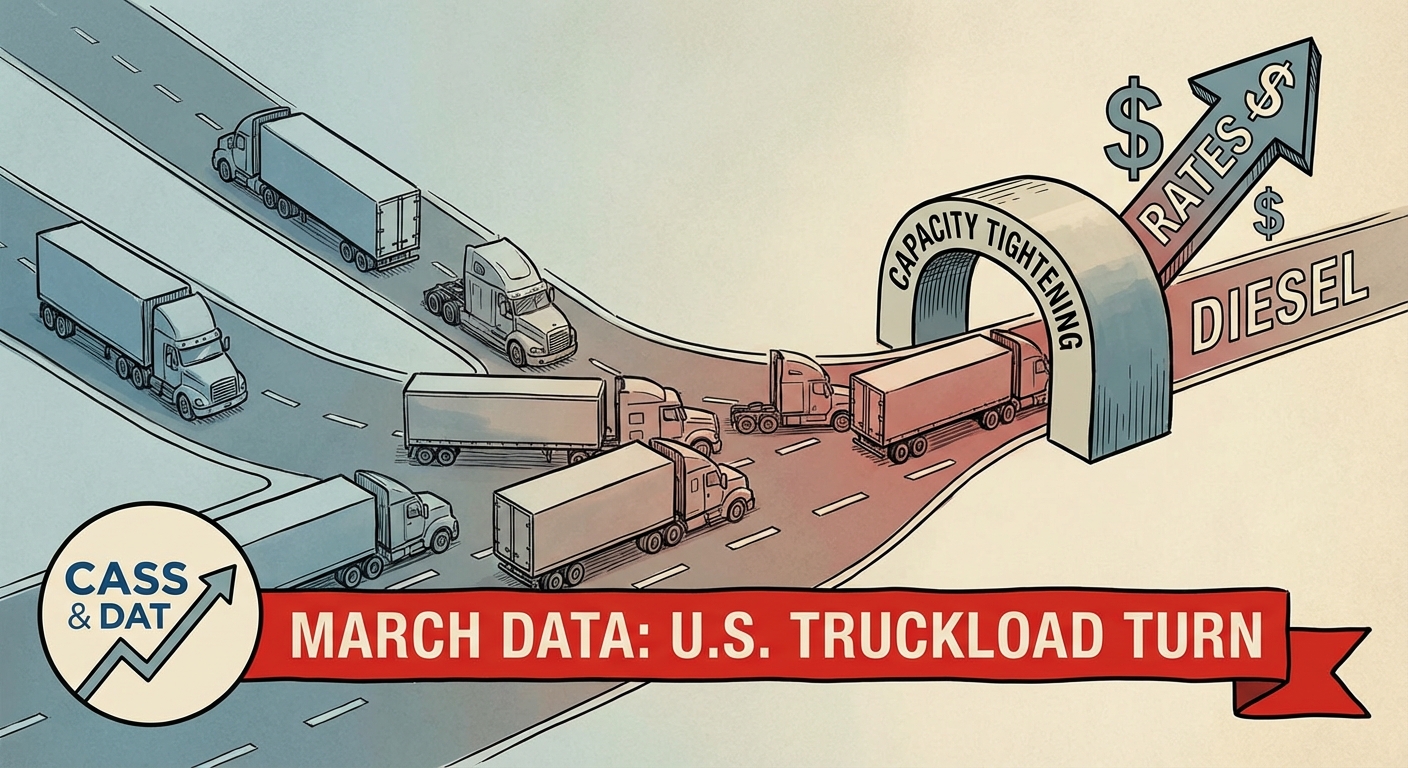 March Data Signals a Clearer U.S. Truckload Turn as Cass and DAT Show Tighter Capacity and Higher Rates
New March 2026 data from Cass and DAT strengthen the case that the U.S. truckload market is moving into a more constrained phase, with improving freight volumes, tighter capacit...
March Data Signals a Clearer U.S. Truckload Turn as Cass and DAT Show Tighter Capacity and Higher Rates
New March 2026 data from Cass and DAT strengthen the case that the U.S. truckload market is moving into a more constrained phase, with improving freight volumes, tighter capacit...
-
 Hormuz Is Not Back to Normal: Ceasefire Opens a Murky Restart Phase for Shipping
The April 8, 2026 U.S.-Iran ceasefire improved the political outlook for the Strait of Hormuz, but commercial shipping had not returned to normal. Iran said passage could resume...
Hormuz Is Not Back to Normal: Ceasefire Opens a Murky Restart Phase for Shipping
The April 8, 2026 U.S.-Iran ceasefire improved the political outlook for the Strait of Hormuz, but commercial shipping had not returned to normal. Iran said passage could resume...
-
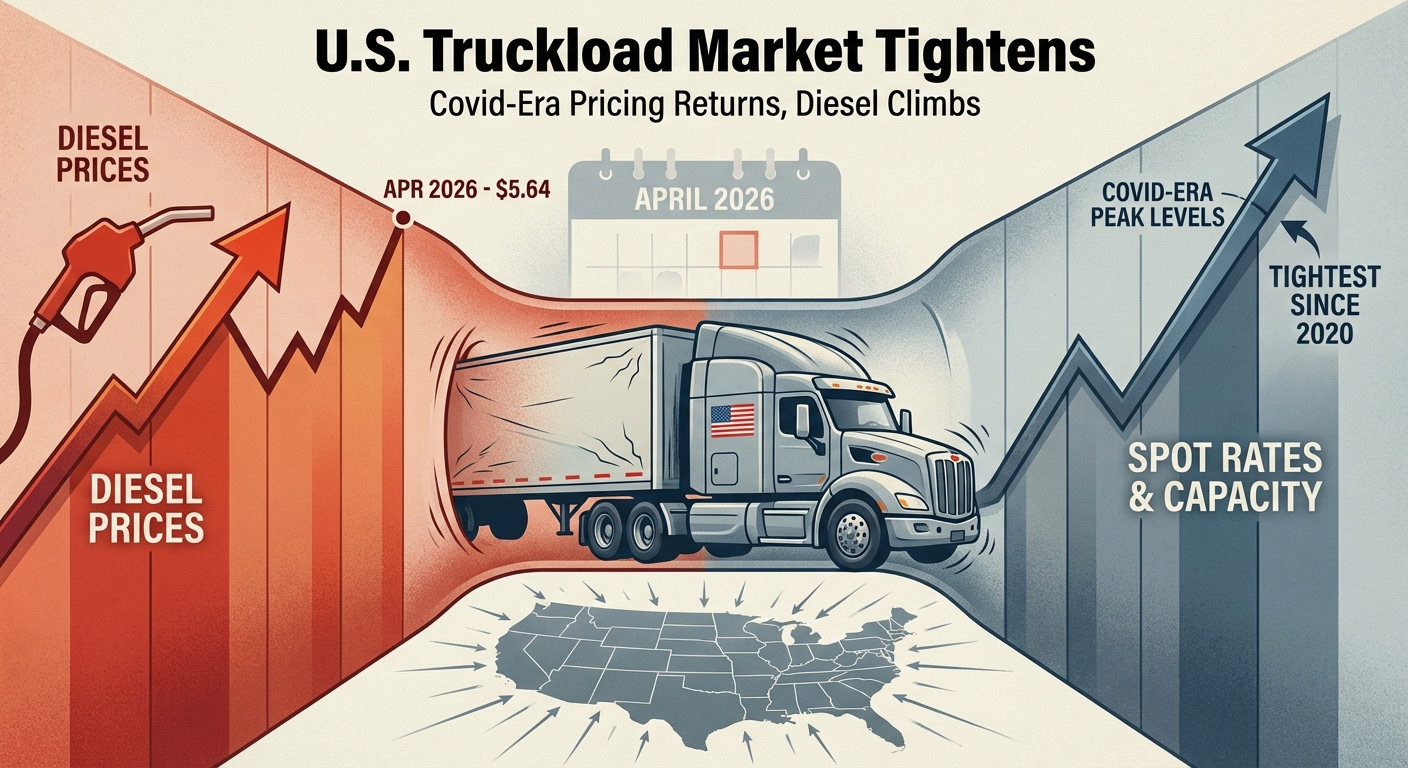 U.S. Truckload Market Tightens Fast as Covid-Era Pricing Extremes Return and Diesel Keeps Climbing
New April 2026 freight reporting points to a meaningful shift in the U.S. truckload market: capacity is tightening, spot rates are rising at the fastest pace since spring 2020, ...
U.S. Truckload Market Tightens Fast as Covid-Era Pricing Extremes Return and Diesel Keeps Climbing
New April 2026 freight reporting points to a meaningful shift in the U.S. truckload market: capacity is tightening, spot rates are rising at the fastest pace since spring 2020, ...
-
 Singapore Bunker Supply Tightens as Hormuz Disruption Spreads the Shipping Cost Shock Beyond the Gulf
Singapore’s bunker market is emerging as a second-order stress point in the Strait of Hormuz crisis, extending the freight shock from Gulf gateway disruption into vessel fueling...
Singapore Bunker Supply Tightens as Hormuz Disruption Spreads the Shipping Cost Shock Beyond the Gulf
Singapore’s bunker market is emerging as a second-order stress point in the Strait of Hormuz crisis, extending the freight shock from Gulf gateway disruption into vessel fueling...
-
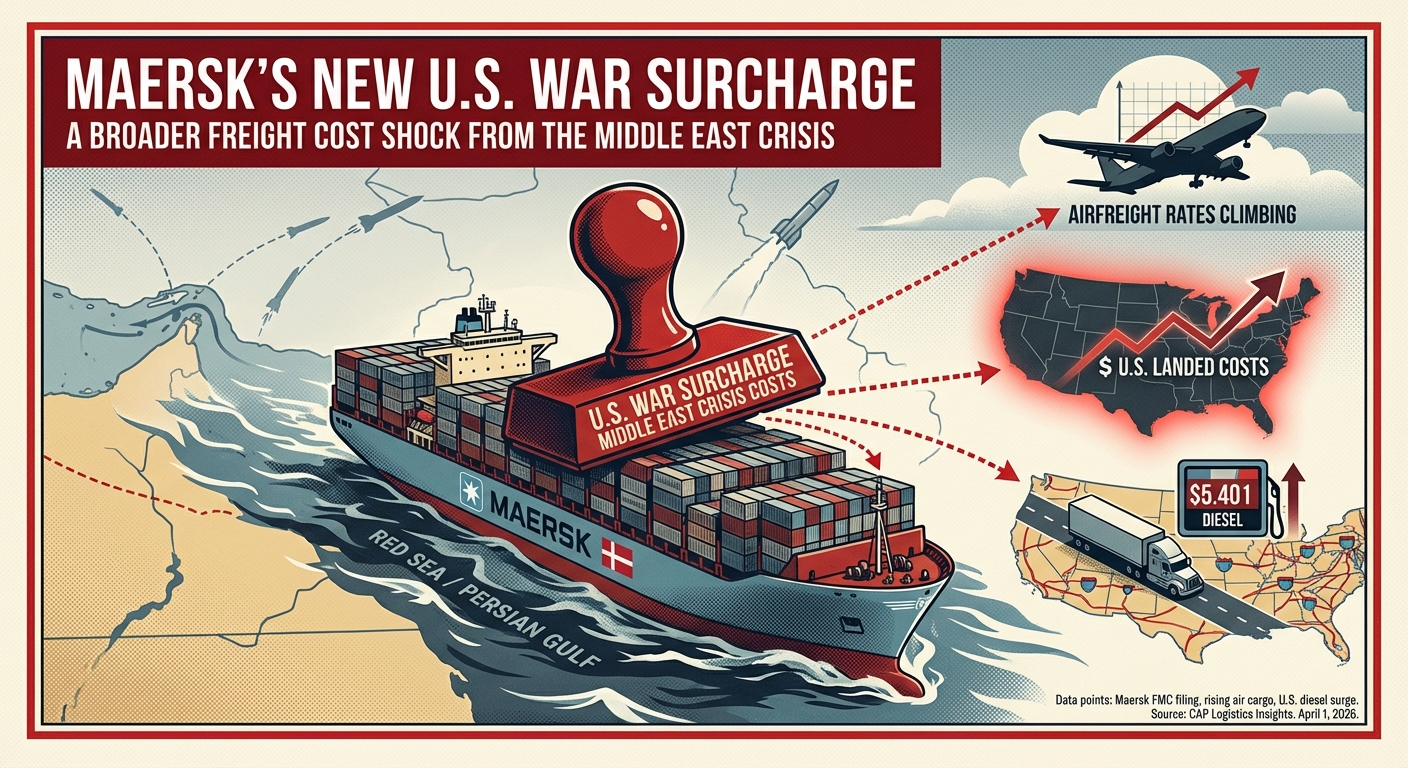 Maersk’s New U.S. War Surcharge Push Signals a Broader Freight Cost Shock From the Middle East Crisis
New emergency surcharge action tied to the Middle East conflict, rising air cargo rates and higher U.S. diesel prices are combining to push the freight crisis from disruption ma...
Maersk’s New U.S. War Surcharge Push Signals a Broader Freight Cost Shock From the Middle East Crisis
New emergency surcharge action tied to the Middle East conflict, rising air cargo rates and higher U.S. diesel prices are combining to push the freight crisis from disruption ma...
-
 Salalah Strike Forces India Trade Reroutes as New Delhi Delays Cabotage Rollback
The Port of Salalah’s temporary closure after a March 28 drone strike has become the clearest sign that the Middle East freight crisis is now reshaping India-linked container ne...
Salalah Strike Forces India Trade Reroutes as New Delhi Delays Cabotage Rollback
The Port of Salalah’s temporary closure after a March 28 drone strike has become the clearest sign that the Middle East freight crisis is now reshaping India-linked container ne...
-
 China-Panama shipping dispute draws U.S. scrutiny as vessel detentions rise
The Federal Maritime Commission has publicly warned that increased Chinese detentions of Panama-flagged vessels could affect U.S.-linked shipping after Panama stripped CK Hutchi...
China-Panama shipping dispute draws U.S. scrutiny as vessel detentions rise
The Federal Maritime Commission has publicly warned that increased Chinese detentions of Panama-flagged vessels could affect U.S.-linked shipping after Panama stripped CK Hutchi...
-
 Hapag-Lloyd says Iran war is adding up to $50 million a week to shipping costs
Hapag-Lloyd’s latest results and management comments show the Iran conflict is imposing major weekly costs on container shipping while extending disruption across the Red Sea an...
Hapag-Lloyd says Iran war is adding up to $50 million a week to shipping costs
Hapag-Lloyd’s latest results and management comments show the Iran conflict is imposing major weekly costs on container shipping while extending disruption across the Red Sea an...
-
 Strait of Hormuz disruption drives carrier suspensions and surcharges across Gulf gateways
Maritime security risk around the Strait of Hormuz has moved from caution to constraint: shipping traffic has fallen sharply since early March 2026, carriers have issued booking...
Strait of Hormuz disruption drives carrier suspensions and surcharges across Gulf gateways
Maritime security risk around the Strait of Hormuz has moved from caution to constraint: shipping traffic has fallen sharply since early March 2026, carriers have issued booking...
-
 Strait of Hormuz disruption widens: carriers suspend Gulf bookings as airspace and port constraints snarl cargo flows
A security-driven disruption around the Strait of Hormuz is constraining commercial vessel transits and Gulf air networks. Carrier notices show widening booking suspensions into...
Strait of Hormuz disruption widens: carriers suspend Gulf bookings as airspace and port constraints snarl cargo flows
A security-driven disruption around the Strait of Hormuz is constraining commercial vessel transits and Gulf air networks. Carrier notices show widening booking suspensions into...
-
 Strait of Hormuz disruption forces carrier suspensions, reroutes—and a fast-moving shock to ocean and air logistics
Security escalation around the Strait of Hormuz is producing an “effective closure” pattern: carrier booking suspensions and cargo-type limits, vessel backlogs, and air cargo re...
Strait of Hormuz disruption forces carrier suspensions, reroutes—and a fast-moving shock to ocean and air logistics
Security escalation around the Strait of Hormuz is producing an “effective closure” pattern: carrier booking suspensions and cargo-type limits, vessel backlogs, and air cargo re...
-
 Strait of Hormuz disruption: what industrial shippers should do now
Escalating security conditions tied to the Strait of Hormuz are trapping vessels, pushing up fuel and insurance costs, and increasing schedule risk for industrial shippers. Proj...
Strait of Hormuz disruption: what industrial shippers should do now
Escalating security conditions tied to the Strait of Hormuz are trapping vessels, pushing up fuel and insurance costs, and increasing schedule risk for industrial shippers. Proj...