
Risk surface
Fuel & surcharges
Diesel, bunker and jet fuel feeding into surcharge and invoice exposure.
-
 Domestic Freight Is Calmer Than July—but Q4 Relief Still Looks Limited
Late-September freight signals suggest the domestic market has shifted from sharp summer repricing to a stubbornly elevated Q4 cost floor. Old Dominion's new 4.9% LTL increase, ...
Domestic Freight Is Calmer Than July—but Q4 Relief Still Looks Limited
Late-September freight signals suggest the domestic market has shifted from sharp summer repricing to a stubbornly elevated Q4 cost floor. Old Dominion's new 4.9% LTL increase, ...
-
 Rail Delays at Major U.S. Ports Are Emerging as the Next Reliability Risk for Import Freight
Rising delays for rail-bound import containers, especially at the Port of Los Angeles, suggest inland intermodal execution is becoming a more immediate risk for import supply ch...
Rail Delays at Major U.S. Ports Are Emerging as the Next Reliability Risk for Import Freight
Rising delays for rail-bound import containers, especially at the Port of Los Angeles, suggest inland intermodal execution is becoming a more immediate risk for import supply ch...
-
 Record Diesel Prices Are Now Hitting the Freight Invoice
A record jump in the DOE/EIA diesel benchmark is poised to flow quickly into fuel surcharges and all-in freight invoices, raising near-term cost and budgeting risk across U.S. s...
Record Diesel Prices Are Now Hitting the Freight Invoice
A record jump in the DOE/EIA diesel benchmark is poised to flow quickly into fuel surcharges and all-in freight invoices, raising near-term cost and budgeting risk across U.S. s...
-
 Air-Cargo Fuel Surcharges Are Rising Again, Turning Jet-Fuel Volatility Into a New Budget Risk for Urgent Shipments
Air-cargo fuel surcharges are rising again as July 2026 jet-fuel prices climb, with some providers resetting charges weekly or every two weeks. That is turning airfreight from a...
Air-Cargo Fuel Surcharges Are Rising Again, Turning Jet-Fuel Volatility Into a New Budget Risk for Urgent Shipments
Air-cargo fuel surcharges are rising again as July 2026 jet-fuel prices climb, with some providers resetting charges weekly or every two weeks. That is turning airfreight from a...
-
 Intermodal Is Becoming Shippers’ Main Escape Valve From Tight Truckload—But the Risk May Just Be Moving Downstream
July 2026 earnings commentary, rail traffic data and market research all point to a stronger intermodal conversion cycle as truckload tightness and fuel costs push more freight ...
Intermodal Is Becoming Shippers’ Main Escape Valve From Tight Truckload—But the Risk May Just Be Moving Downstream
July 2026 earnings commentary, rail traffic data and market research all point to a stronger intermodal conversion cycle as truckload tightness and fuel costs push more freight ...
-
 Fuel Is Now Broadening the 2026 Freight Cost Squeeze Beyond Truckload
Mid-July 2026 freight data from AFS Logistics, TD Cowen, FreightWaves and Tabi Connect indicates the domestic freight repricing cycle is broadening beyond truckload. Higher dies...
Fuel Is Now Broadening the 2026 Freight Cost Squeeze Beyond Truckload
Mid-July 2026 freight data from AFS Logistics, TD Cowen, FreightWaves and Tabi Connect indicates the domestic freight repricing cycle is broadening beyond truckload. Higher dies...
-
 LTL Carriers Are Gaining Leverage as Truckload Tightens—and That Could Broaden the 2026 Freight Cost Squeeze
LTL carriers appear to be gaining pricing power in mid-2026 as truckload capacity tightens, with heavier shipments shifting modes and fuel and labor costs amplifying the effect....
LTL Carriers Are Gaining Leverage as Truckload Tightens—and That Could Broaden the 2026 Freight Cost Squeeze
LTL carriers appear to be gaining pricing power in mid-2026 as truckload capacity tightens, with heavier shipments shifting modes and fuel and labor costs amplifying the effect....
-
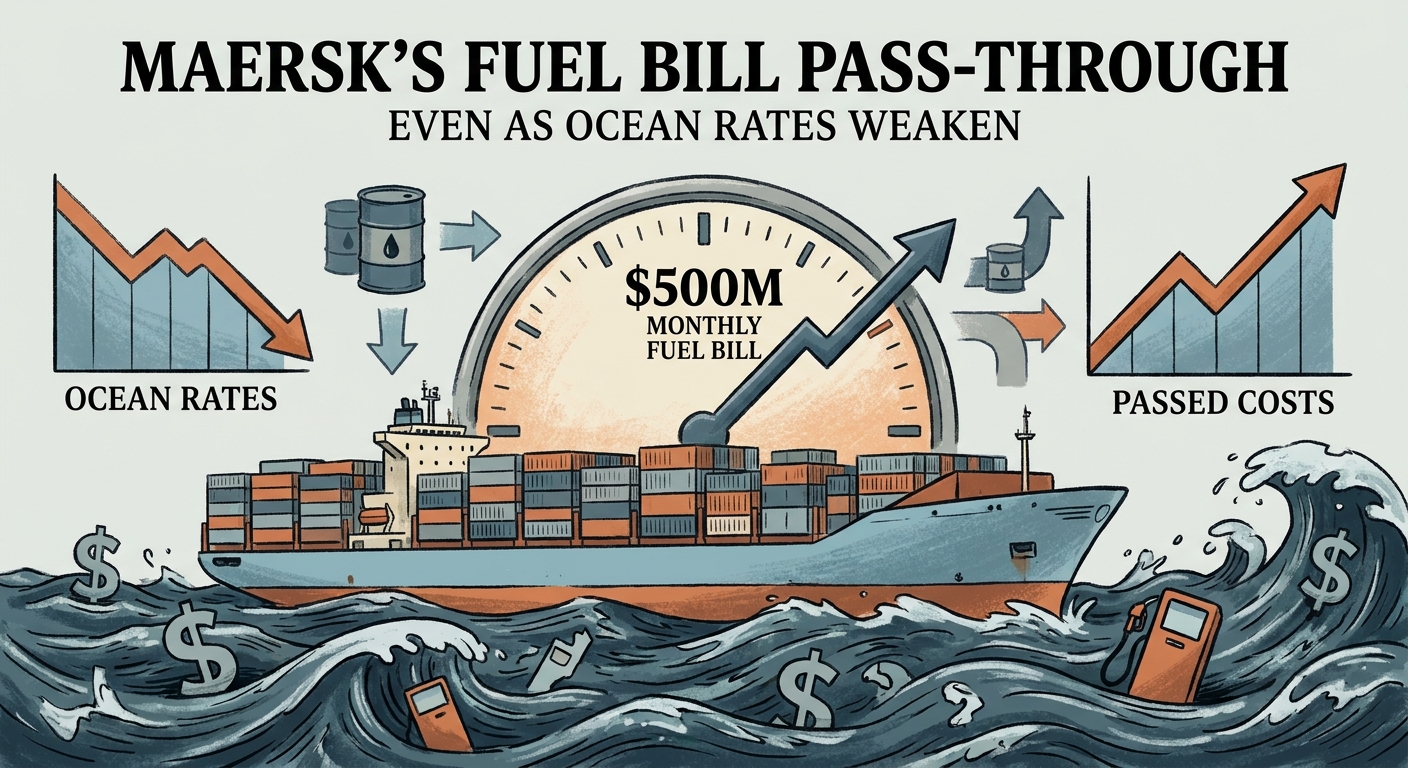 Maersk Says It Is Passing a $500 Million Monthly Fuel Bill to Customers—Even as Weaker Ocean Rates Pressure Profits
Maersk’s May 7 comments and Q1 results suggest the Middle East shipping crisis is no longer just a routing disruption. With the carrier saying it is passing through about $500 m...
Maersk Says It Is Passing a $500 Million Monthly Fuel Bill to Customers—Even as Weaker Ocean Rates Pressure Profits
Maersk’s May 7 comments and Q1 results suggest the Middle East shipping crisis is no longer just a routing disruption. With the carrier saying it is passing through about $500 m...
-
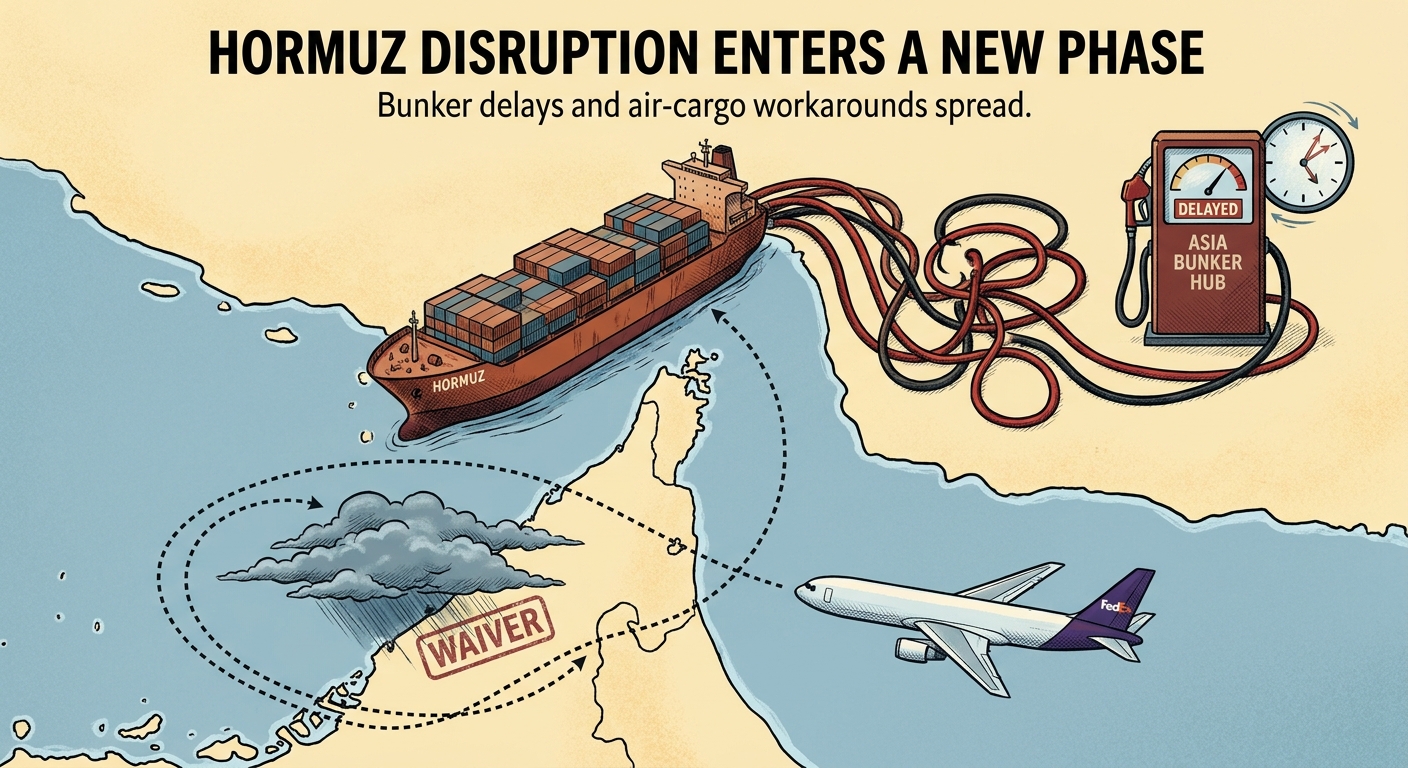 Hormuz Disruption Enters a New Phase as Bunker Delays and Air-Cargo Workarounds Spread
Fresh reporting in early May 2026 suggests the Strait of Hormuz crisis has entered a new operational phase. Maritime attacks and suppressed transit levels are now colliding with...
Hormuz Disruption Enters a New Phase as Bunker Delays and Air-Cargo Workarounds Spread
Fresh reporting in early May 2026 suggests the Strait of Hormuz crisis has entered a new operational phase. Maritime attacks and suppressed transit levels are now colliding with...
-
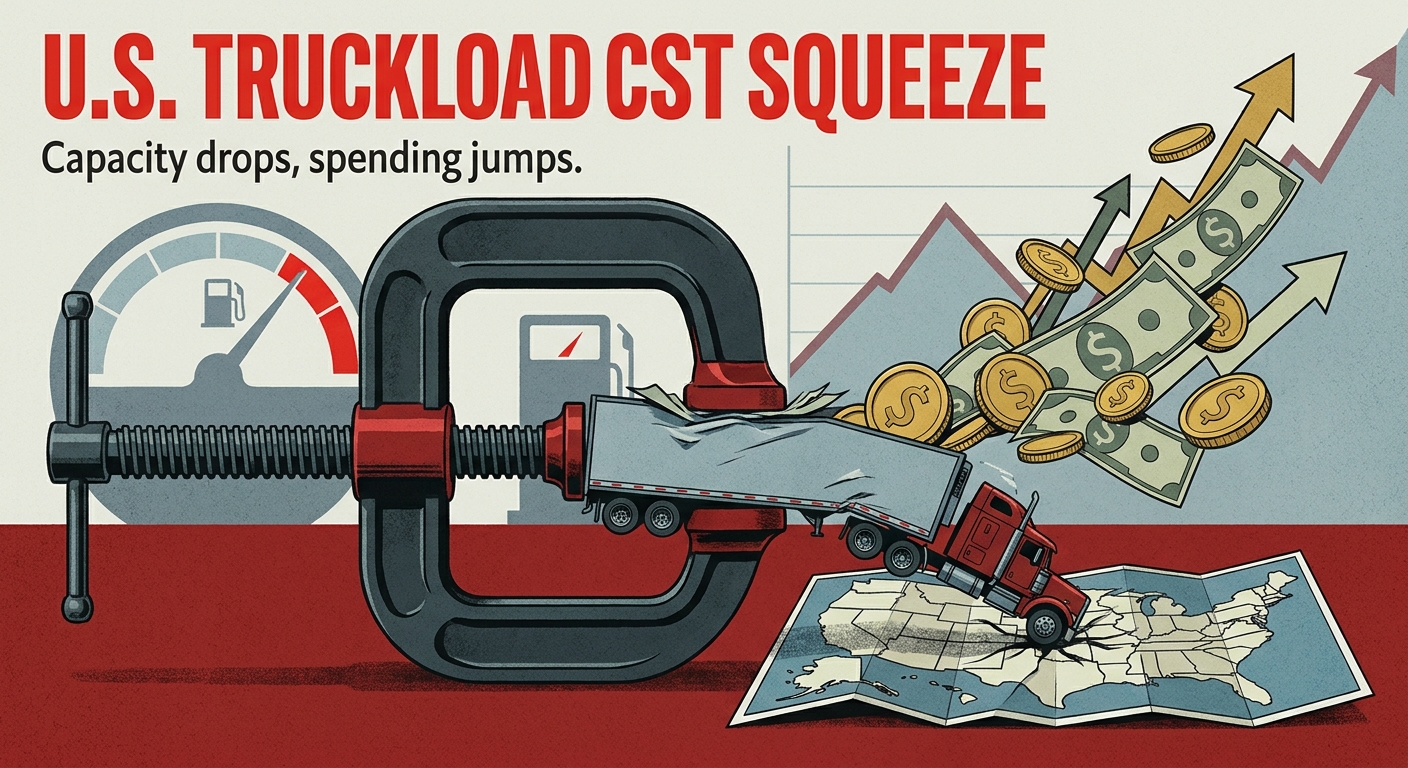 U.S. Truckload Is Entering a Cost Squeeze: April Capacity Drop and Q1 Spending Jump Raise the Stakes
New May 5 data suggests U.S. truckload has moved from simple tightening into a sharper cost squeeze. U.S. Bank’s Q1 Freight Payment Index showed spending up 12.9% quarter over q...
U.S. Truckload Is Entering a Cost Squeeze: April Capacity Drop and Q1 Spending Jump Raise the Stakes
New May 5 data suggests U.S. truckload has moved from simple tightening into a sharper cost squeeze. U.S. Bank’s Q1 Freight Payment Index showed spending up 12.9% quarter over q...
-
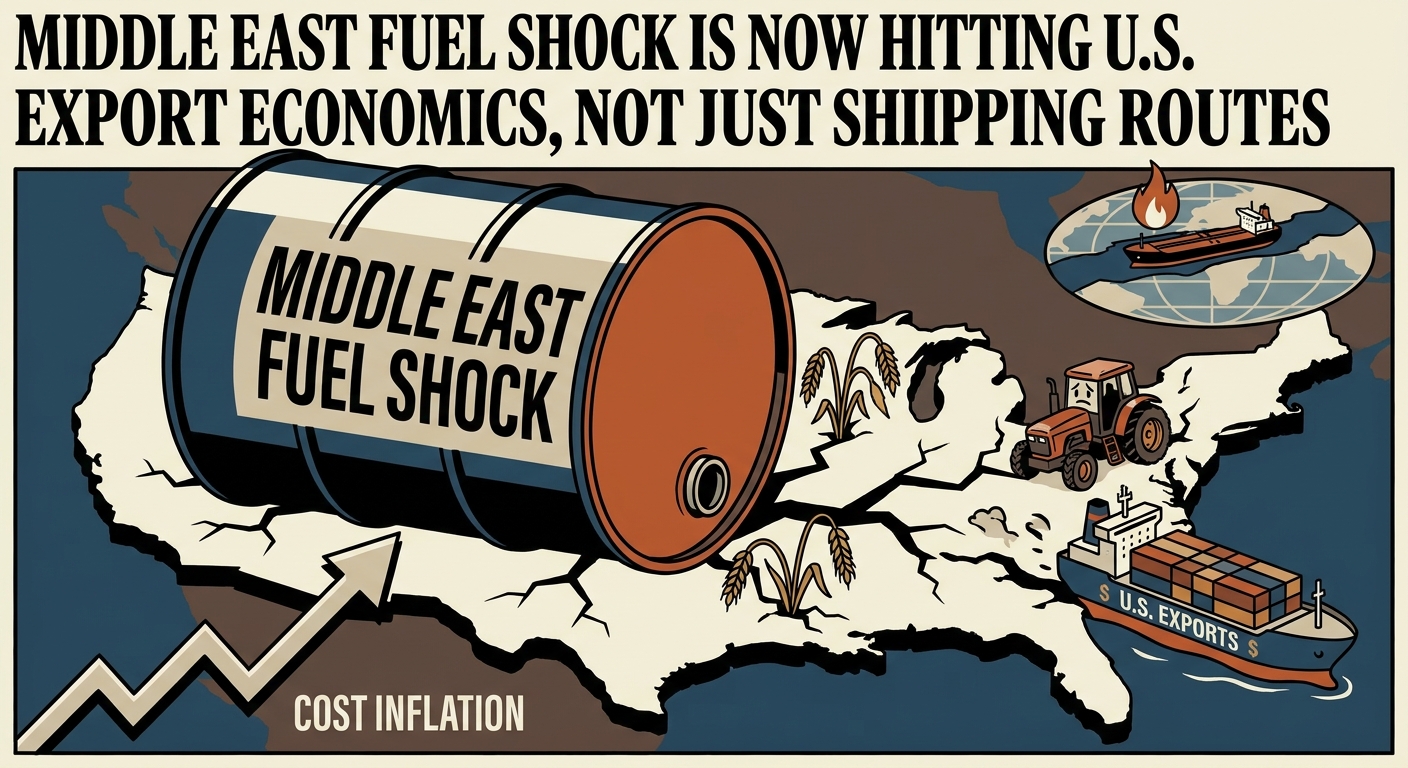 Middle East Fuel Shock Is Now Hitting U.S. Export Economics, Not Just Shipping Routes
The Strait of Hormuz crisis has entered a more commercially painful phase, with bunker surcharges, elevated diesel prices, and gateway congestion now translating into measurable...
Middle East Fuel Shock Is Now Hitting U.S. Export Economics, Not Just Shipping Routes
The Strait of Hormuz crisis has entered a more commercially painful phase, with bunker surcharges, elevated diesel prices, and gateway congestion now translating into measurable...
-
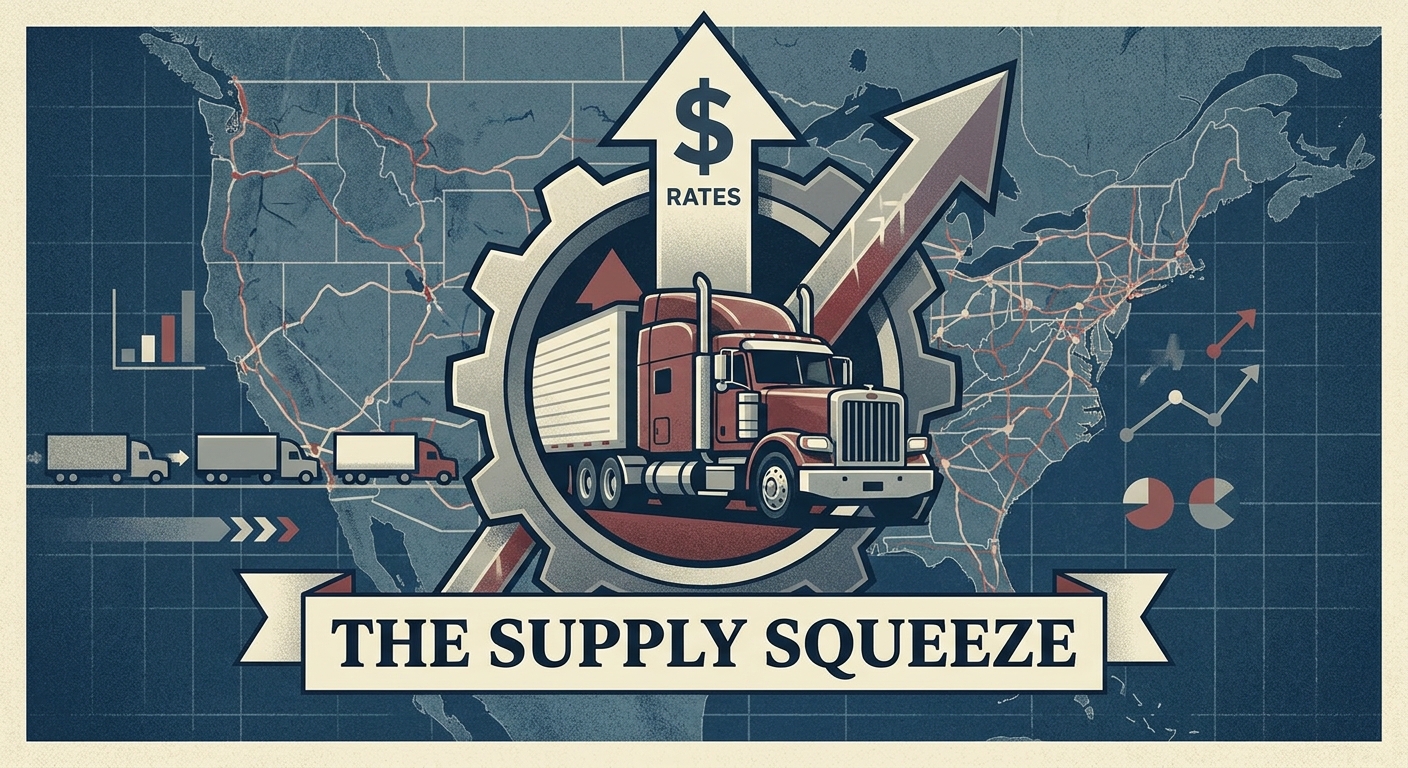 North American Truckload Enters a Supply-Driven Tightening Phase as Rates Rise in Q2
Late-April market updates from TRAFFIX, ACT Research, Covenant Logistics and others suggest North American truckload is moving into a more durable tightening cycle in Q2 2026. T...
North American Truckload Enters a Supply-Driven Tightening Phase as Rates Rise in Q2
Late-April market updates from TRAFFIX, ACT Research, Covenant Logistics and others suggest North American truckload is moving into a more durable tightening cycle in Q2 2026. T...
-
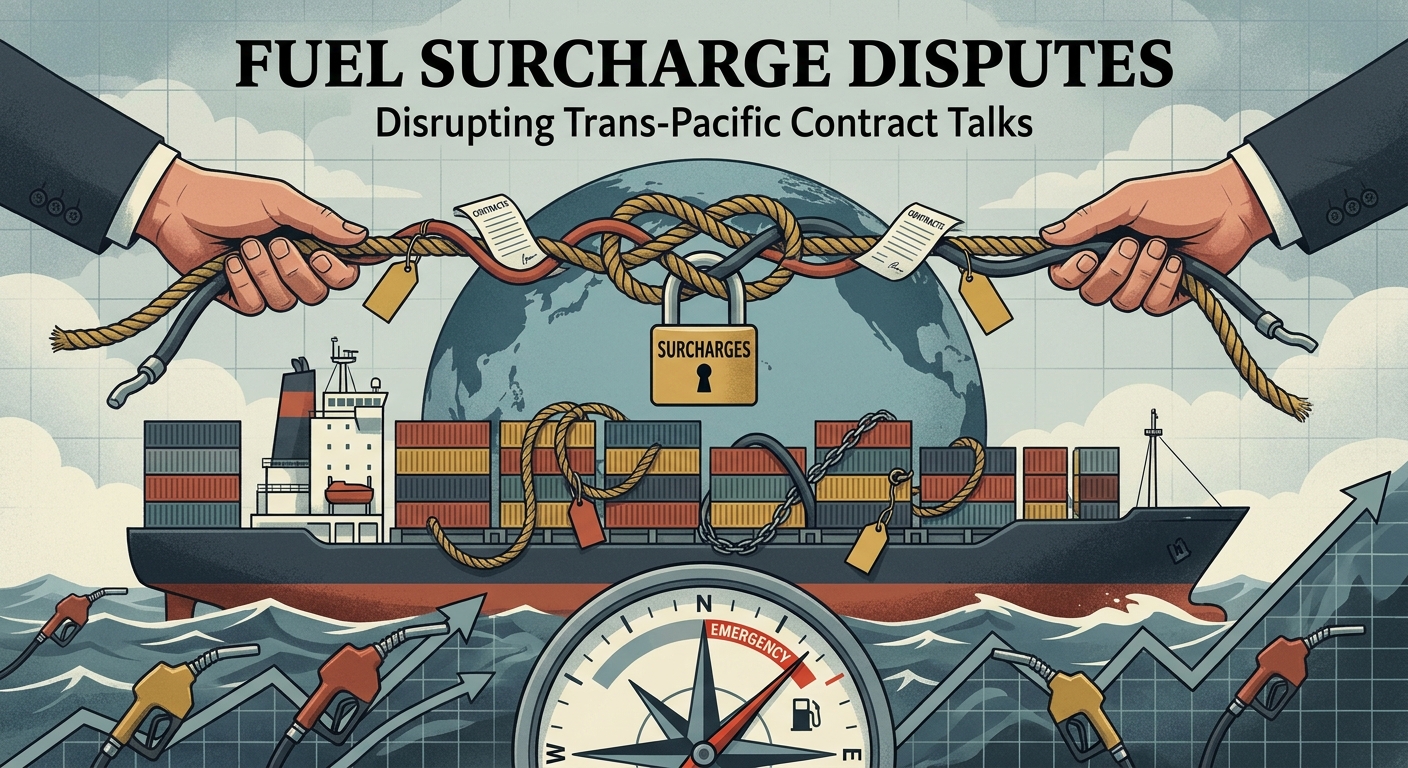 Fuel Surcharge Disputes Are Now Disrupting Trans-Pacific Contract Talks for 2026-27
Ocean carriers' differing use of emergency fuel, bunker, feeder, and inland surcharges is complicating 2026-27 trans-Pacific contract negotiations just as the May 1 benchmark ap...
Fuel Surcharge Disputes Are Now Disrupting Trans-Pacific Contract Talks for 2026-27
Ocean carriers' differing use of emergency fuel, bunker, feeder, and inland surcharges is complicating 2026-27 trans-Pacific contract negotiations just as the May 1 benchmark ap...
-
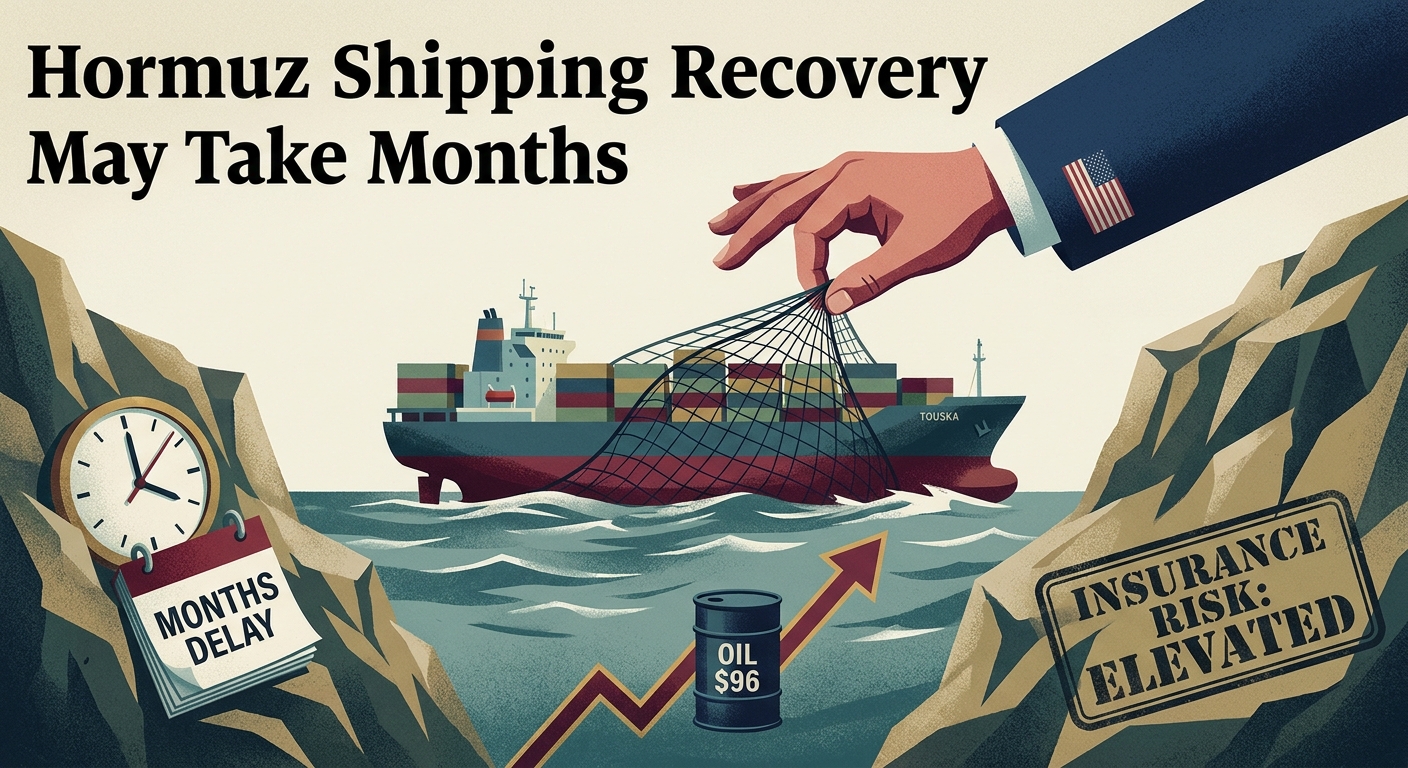 Hormuz Shipping Recovery May Take Months After U.S. Seizes Iranian-Flagged Cargo Ship
A U.S. seizure of an Iranian-flagged cargo ship on April 19-20 has undermined hopes that the April 8 ceasefire would quickly restore normal shipping conditions in the Strait of ...
Hormuz Shipping Recovery May Take Months After U.S. Seizes Iranian-Flagged Cargo Ship
A U.S. seizure of an Iranian-flagged cargo ship on April 19-20 has undermined hopes that the April 8 ceasefire would quickly restore normal shipping conditions in the Strait of ...
-
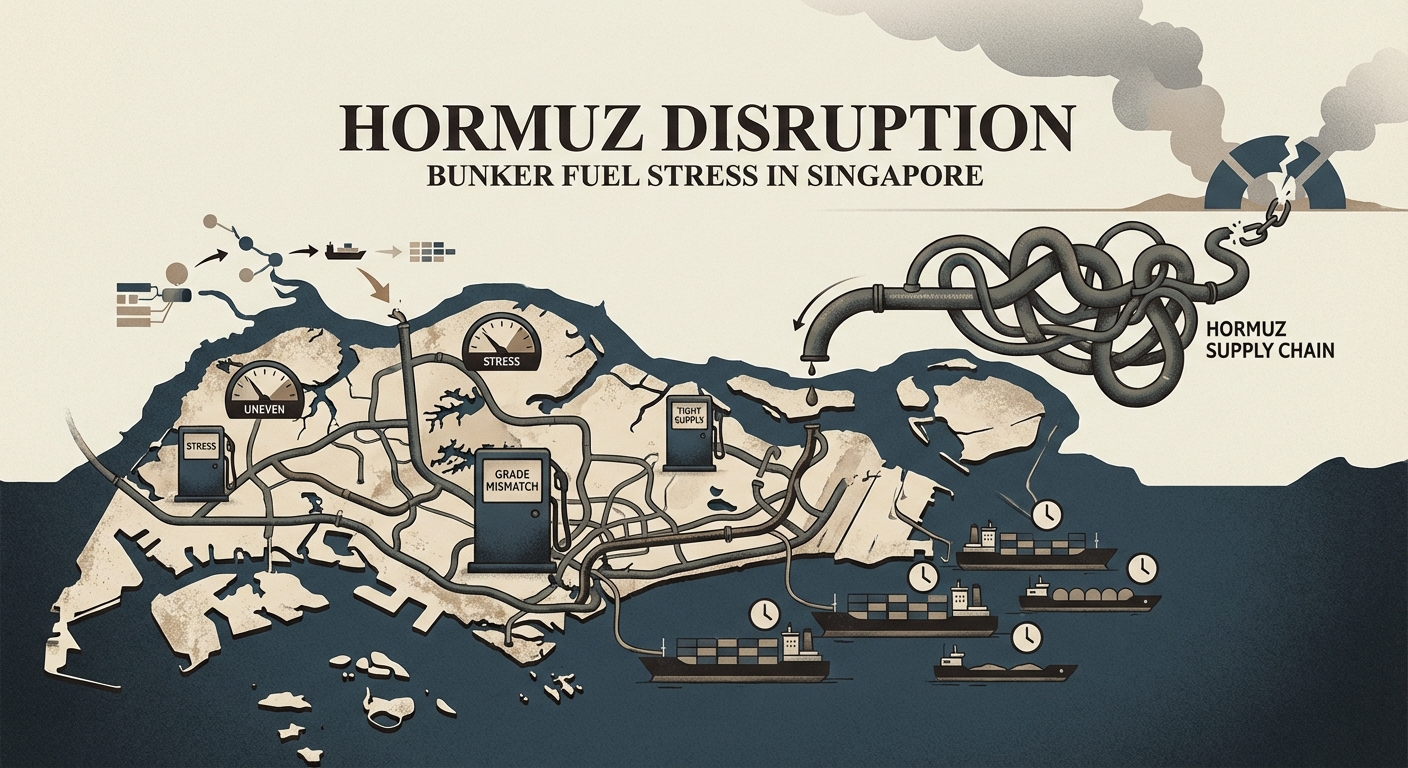 Post-Ceasefire Hormuz Disruption Is Still Hitting Shipping Through Bunker Fuel Stress in Singapore
Even after the April 8 ceasefire, the Strait of Hormuz crisis is still affecting shipping through uneven bunker fuel availability in Asia, especially Singapore. The problem is l...
Post-Ceasefire Hormuz Disruption Is Still Hitting Shipping Through Bunker Fuel Stress in Singapore
Even after the April 8 ceasefire, the Strait of Hormuz crisis is still affecting shipping through uneven bunker fuel availability in Asia, especially Singapore. The problem is l...
-
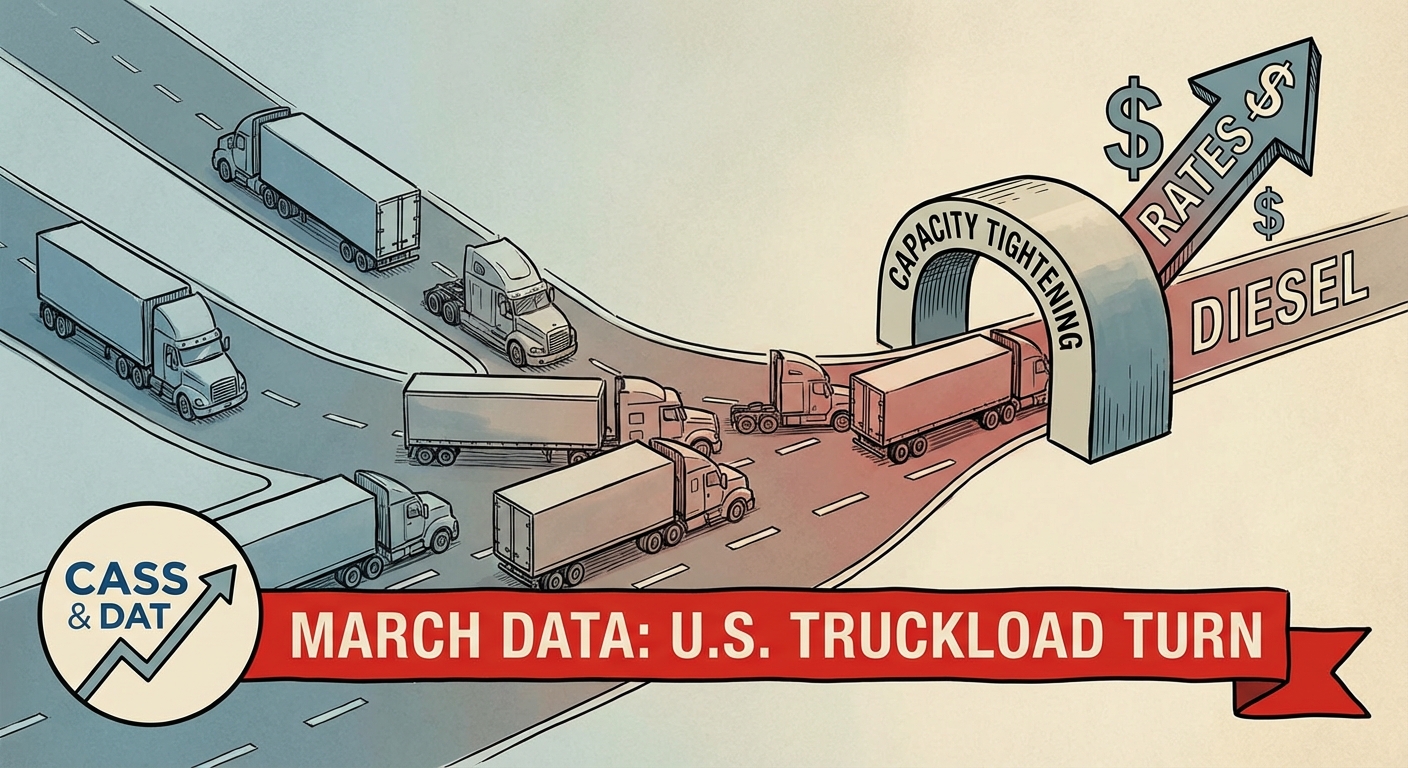 March Data Signals a Clearer U.S. Truckload Turn as Cass and DAT Show Tighter Capacity and Higher Rates
New March 2026 data from Cass and DAT strengthen the case that the U.S. truckload market is moving into a more constrained phase, with improving freight volumes, tighter capacit...
March Data Signals a Clearer U.S. Truckload Turn as Cass and DAT Show Tighter Capacity and Higher Rates
New March 2026 data from Cass and DAT strengthen the case that the U.S. truckload market is moving into a more constrained phase, with improving freight volumes, tighter capacit...
-
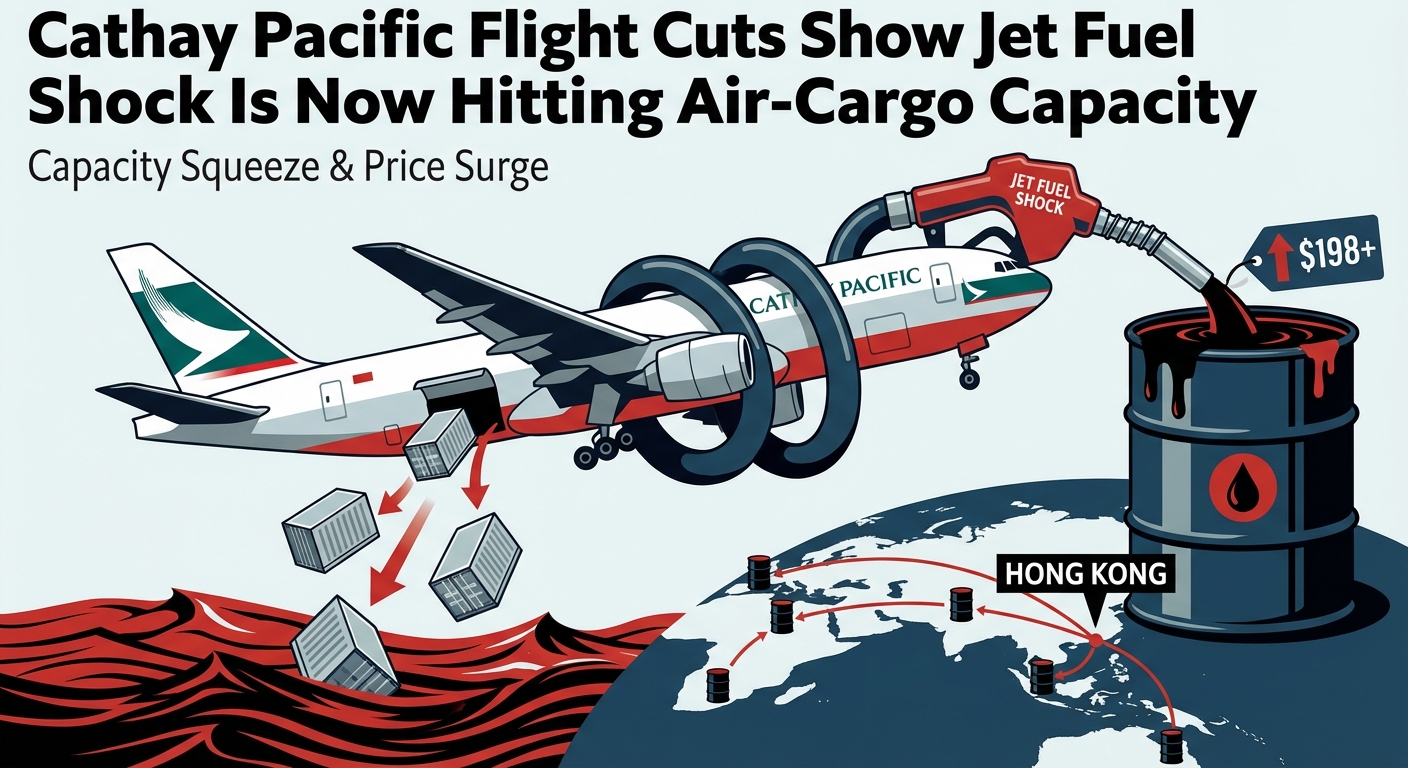 Cathay Pacific Flight Cuts Show Jet Fuel Shock Is Now Hitting Air-Cargo Capacity
Cathay Pacific’s planned May-June flight reductions mark a shift from fuel-cost pressure to actual network changes, adding new risk for airfreight capacity, pricing, and shipmen...
Cathay Pacific Flight Cuts Show Jet Fuel Shock Is Now Hitting Air-Cargo Capacity
Cathay Pacific’s planned May-June flight reductions mark a shift from fuel-cost pressure to actual network changes, adding new risk for airfreight capacity, pricing, and shipmen...
-
 Hormuz Is Not Back to Normal: Ceasefire Opens a Murky Restart Phase for Shipping
The April 8, 2026 U.S.-Iran ceasefire improved the political outlook for the Strait of Hormuz, but commercial shipping had not returned to normal. Iran said passage could resume...
Hormuz Is Not Back to Normal: Ceasefire Opens a Murky Restart Phase for Shipping
The April 8, 2026 U.S.-Iran ceasefire improved the political outlook for the Strait of Hormuz, but commercial shipping had not returned to normal. Iran said passage could resume...
-
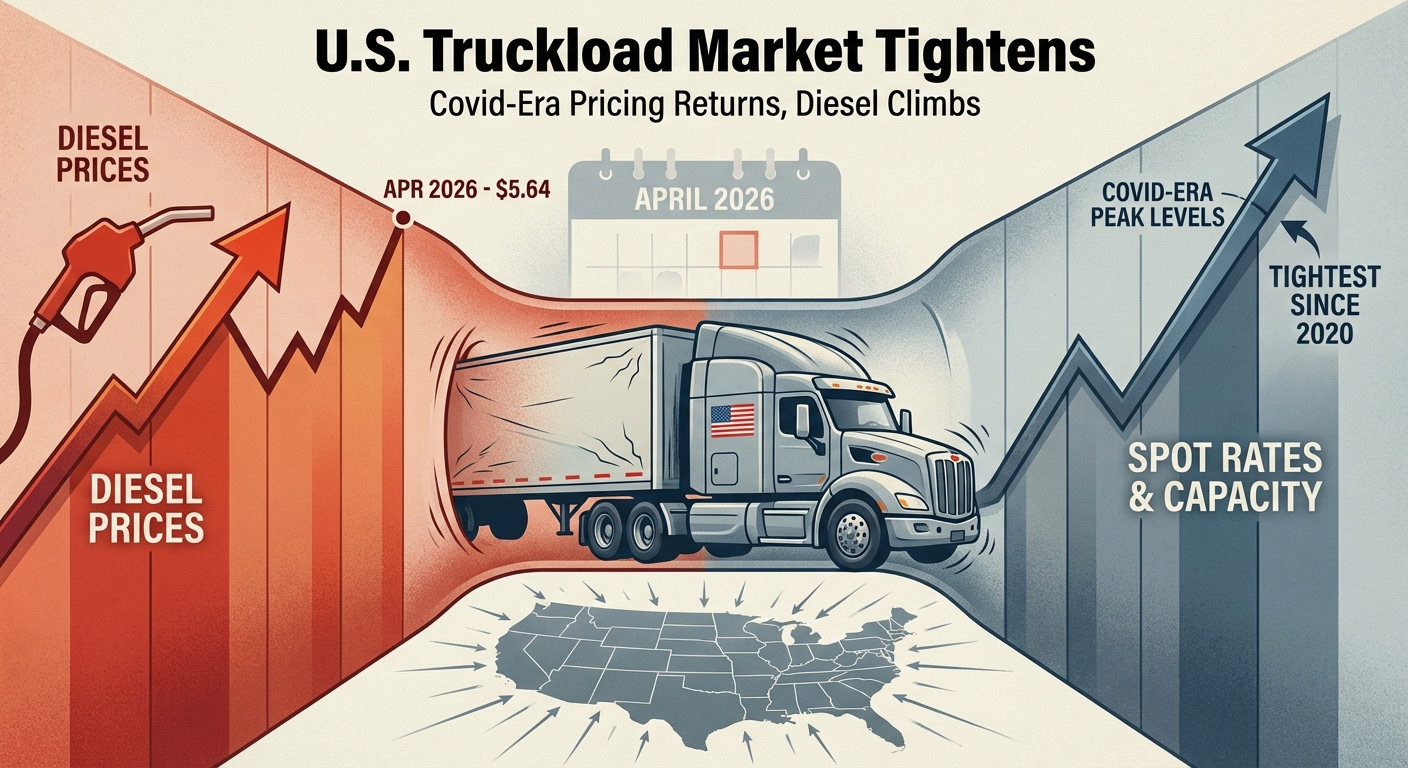 U.S. Truckload Market Tightens Fast as Covid-Era Pricing Extremes Return and Diesel Keeps Climbing
New April 2026 freight reporting points to a meaningful shift in the U.S. truckload market: capacity is tightening, spot rates are rising at the fastest pace since spring 2020, ...
U.S. Truckload Market Tightens Fast as Covid-Era Pricing Extremes Return and Diesel Keeps Climbing
New April 2026 freight reporting points to a meaningful shift in the U.S. truckload market: capacity is tightening, spot rates are rising at the fastest pace since spring 2020, ...
-
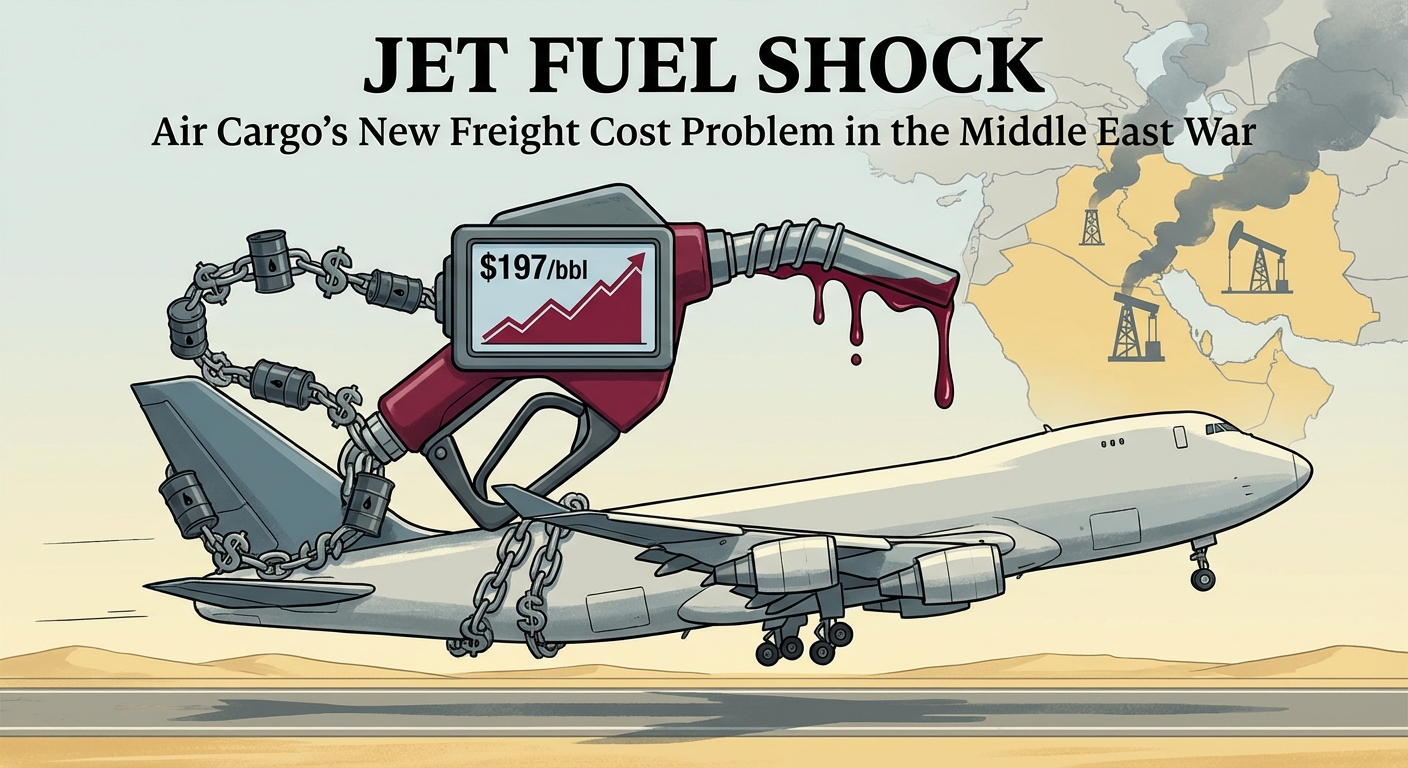 Jet Fuel Shock Is Making Air Cargo the Next Freight Cost Problem in the Middle East War
A sharp rise in jet fuel prices is creating a new logistics risk in the Middle East war: air cargo is becoming more expensive, less predictable, and potentially more selective j...
Jet Fuel Shock Is Making Air Cargo the Next Freight Cost Problem in the Middle East War
A sharp rise in jet fuel prices is creating a new logistics risk in the Middle East war: air cargo is becoming more expensive, less predictable, and potentially more selective j...
-
 Singapore Bunker Supply Tightens as Hormuz Disruption Spreads the Shipping Cost Shock Beyond the Gulf
Singapore’s bunker market is emerging as a second-order stress point in the Strait of Hormuz crisis, extending the freight shock from Gulf gateway disruption into vessel fueling...
Singapore Bunker Supply Tightens as Hormuz Disruption Spreads the Shipping Cost Shock Beyond the Gulf
Singapore’s bunker market is emerging as a second-order stress point in the Strait of Hormuz crisis, extending the freight shock from Gulf gateway disruption into vessel fueling...
-
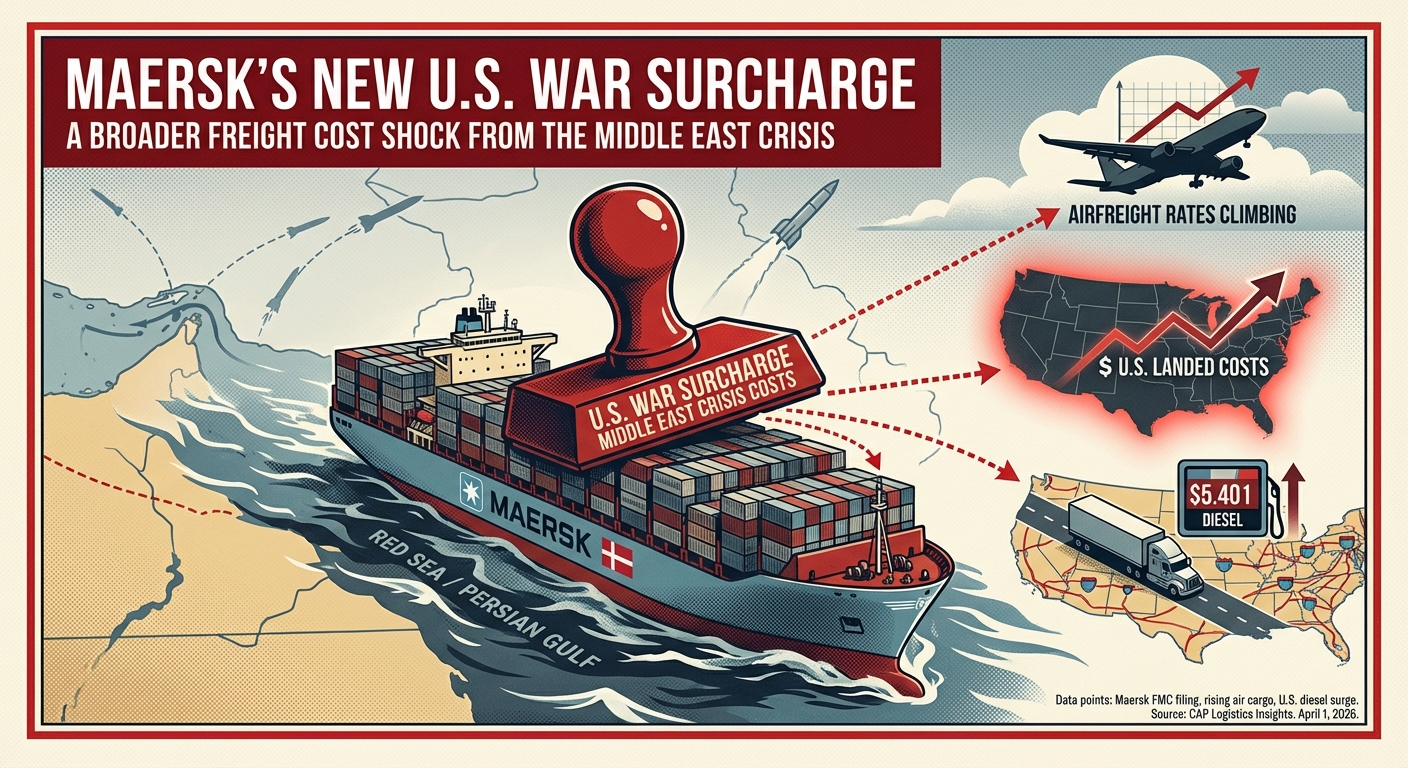 Maersk’s New U.S. War Surcharge Push Signals a Broader Freight Cost Shock From the Middle East Crisis
New emergency surcharge action tied to the Middle East conflict, rising air cargo rates and higher U.S. diesel prices are combining to push the freight crisis from disruption ma...
Maersk’s New U.S. War Surcharge Push Signals a Broader Freight Cost Shock From the Middle East Crisis
New emergency surcharge action tied to the Middle East conflict, rising air cargo rates and higher U.S. diesel prices are combining to push the freight crisis from disruption ma...
-
 Hapag-Lloyd says Iran war is adding up to $50 million a week to shipping costs
Hapag-Lloyd’s latest results and management comments show the Iran conflict is imposing major weekly costs on container shipping while extending disruption across the Red Sea an...
Hapag-Lloyd says Iran war is adding up to $50 million a week to shipping costs
Hapag-Lloyd’s latest results and management comments show the Iran conflict is imposing major weekly costs on container shipping while extending disruption across the Red Sea an...
-
 USPS Moves Toward First Fuel Surcharge as Iran War Pushes Up Transport Costs
USPS is preparing an approximately 8% fuel surcharge on parcel products as war-related energy disruptions and rising diesel prices lift transportation costs. The move could beco...
USPS Moves Toward First Fuel Surcharge as Iran War Pushes Up Transport Costs
USPS is preparing an approximately 8% fuel surcharge on parcel products as war-related energy disruptions and rising diesel prices lift transportation costs. The move could beco...
-
 Strait of Hormuz disruption drives carrier suspensions and surcharges across Gulf gateways
Maritime security risk around the Strait of Hormuz has moved from caution to constraint: shipping traffic has fallen sharply since early March 2026, carriers have issued booking...
Strait of Hormuz disruption drives carrier suspensions and surcharges across Gulf gateways
Maritime security risk around the Strait of Hormuz has moved from caution to constraint: shipping traffic has fallen sharply since early March 2026, carriers have issued booking...
-
 Strait of Hormuz disruption: what industrial shippers should do now
Escalating security conditions tied to the Strait of Hormuz are trapping vessels, pushing up fuel and insurance costs, and increasing schedule risk for industrial shippers. Proj...
Strait of Hormuz disruption: what industrial shippers should do now
Escalating security conditions tied to the Strait of Hormuz are trapping vessels, pushing up fuel and insurance costs, and increasing schedule risk for industrial shippers. Proj...