

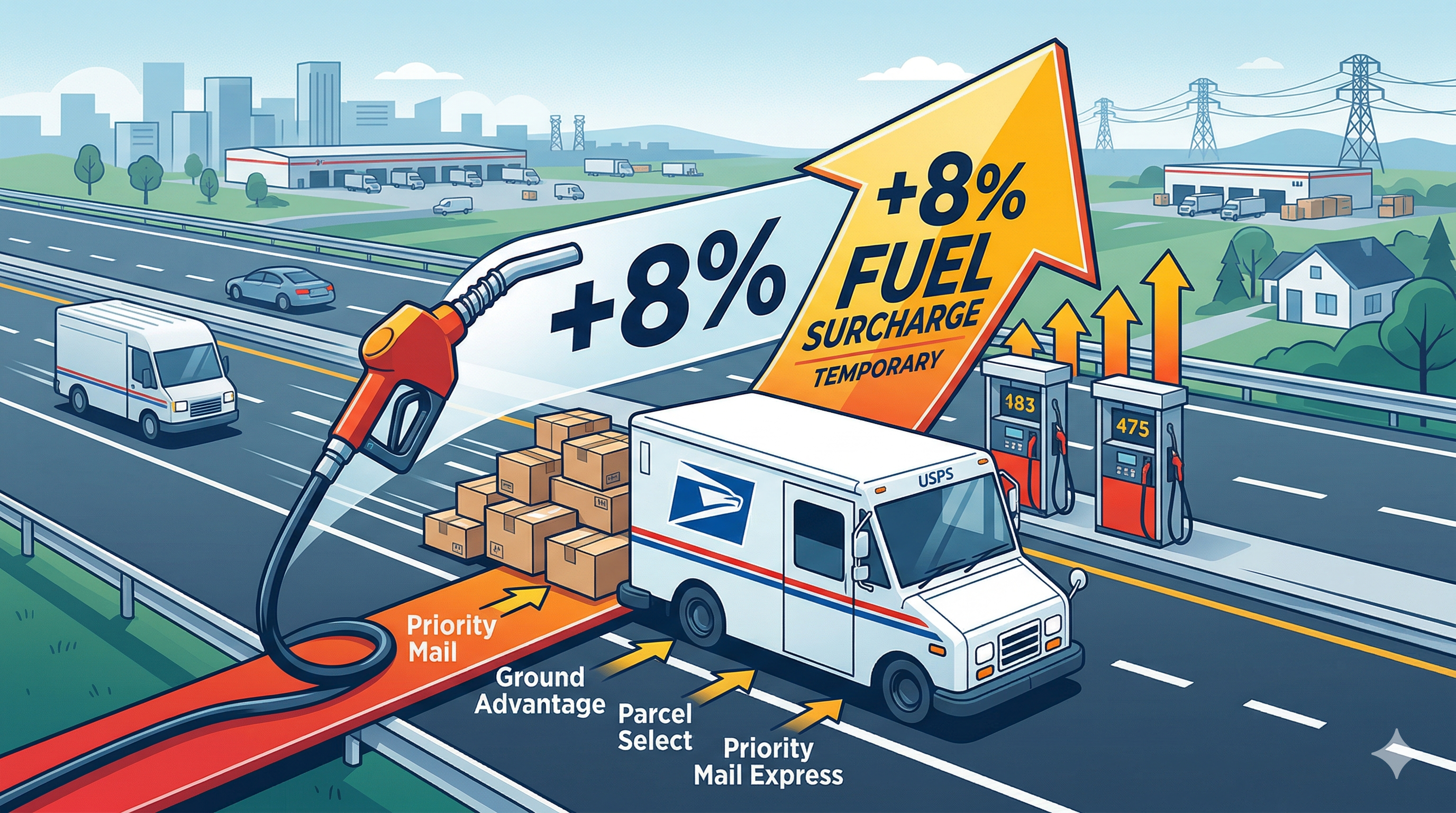
USPS is preparing an approximately 8% fuel surcharge on parcel products as war-related energy disruptions and rising diesel prices lift transportation costs. The move could become an early indicator of broader repricing pressure across domestic logistics.
- USPS is preparing what would be a first broad fuel surcharge for parcel products.
- The move follows fuel and transport-cost increases tied to the March 2026 Iran war and Strait of Hormuz disruption.
- Rising diesel prices are already feeding into domestic trucking and parcel economics.
- The final surcharge structure will depend on regulatory treatment and product scope.
- The broader implication is renewed fuel-risk exposure across transportation budgets and contracts.
The U.S. Postal Service is preparing to add what would be its first broad fuel surcharge on parcel products, an unusual move that underscores how quickly geopolitics can bleed into domestic transportation pricing. The immediate backdrop is the sharp increase in oil, refined-product and shipping risk premiums tied to the March 2026 Iran war and disruptions around the Strait of Hormuz, a chokepoint for roughly one-fifth of global oil flows.
What happened
According to reporting by FreightWaves, USPS is seeking an approximately 8% fuel surcharge on competitive parcel products as diesel, jet fuel and purchased transportation costs rise faster than its normal pricing mechanisms can absorb. That would be a notable break with Postal Service practice: unlike private parcel carriers, USPS historically has not relied on a standard fuel surcharge structure for parcels.
The timing matters. Since the conflict escalated in late February 2026, traffic through the Strait of Hormuz has been disrupted and tanker markets have repriced sharply. S&P Global Commodity Insights reported that vessel transits through the strait fell dramatically in early March, while tanker freight costs surged. Broader market coverage from The Washington Post and AP has described the disruption as a direct threat to global fuel markets and transport economics.
Why this is bigger than a parcel pricing story
USPS is not the largest buyer of trucking capacity in the country, but it is one of the largest transportation procurers in the domestic parcel system. The Postal Service depends on a vast mix of linehaul trucking, air transport and contractor capacity, so a fuel-cost spike does not stay isolated for long. If USPS formalizes a surcharge, it would signal that fuel inflation has moved from market volatility into tariff-level pricing action.
That matters because diesel has already been climbing. The U.S. Energy Information Administration’s weekly diesel series showed U.S. on-highway diesel prices continuing their March rise, following a multiweek uptrend also highlighted in EIA’s gasoline and diesel update. Even if crude prices pull back intermittently, transportation buyers are still exposed to lagged effects in rack prices, contract fuel formulas, aviation fuel and marine surcharges.
In other words, USPS is reacting to the same cost stack affecting trucking fleets, domestic air cargo operators, parcel integrators and many industrial shippers: higher fuel, higher risk pricing, and less room to wait for annual or semiannual base-rate resets.
The policy and filing angle
The key operational question is not simply whether USPS wants a surcharge, but how quickly regulators allow it and which products it covers. Competitive products such as package services are governed differently from market-dominant mail, which gives the Postal Service more pricing flexibility than it has for letters and flats. Recent Postal Regulatory Commission activity has already shown close scrutiny of USPS pricing rules and timing, especially around how often rates can be adjusted.
That means the final shape of any surcharge could still change: its percentage, the effective date, the products covered, and whether it is presented as a temporary emergency measure or folded into a more durable fuel-adjustment mechanism.
What changes operationally
1. Parcel and small-package cost baselines move higher
If USPS implements a fuel surcharge, shippers that use Postal Service parcel products directly or indirectly through consolidators should expect repricing pressure in the near term. The practical effect may extend beyond USPS invoices themselves because many hybrid networks benchmark against postal economics.
2. Fuel volatility is spreading across modes
The underlying issue is not just parcel pricing. Higher energy costs raise drayage, over-the-road truckload, LTL, rail fuel surcharges and airfreight operating costs. A fuel event that starts in the Gulf can quickly show up in domestic procurement budgets, especially where transportation is heavily outsourced.
3. Emergency pricing mechanisms are back in focus
For much of the past year, many transportation buyers treated fuel surcharges as manageable and formulaic. This episode reintroduces the possibility of nonstandard surcharges, temporary accessorials and expedited contract reopeners if the energy shock persists.
What remains uncertain
Several points are still fluid.
First, the trajectory of the Iran conflict remains uncertain, including whether shipping conditions around Hormuz normalize quickly or stay constrained. Second, oil-market disruption does not translate one-for-one into U.S. retail diesel, so the duration of the domestic cost shock is not yet clear. Third, USPS still must navigate the regulatory path and customer response to a surcharge that would be new in kind, not just in amount.
There is also a broader market question: if one major public-sector parcel network moves first, will other carriers revisit how aggressively they pass through fuel in the second quarter of 2026?
Why industrial supply chains should pay attention
For manufacturers, project cargo planners and heavy-industry supply chains, the USPS story is best read as a market signal rather than a postal niche issue. When the Postal Service concludes that fuel inflation warrants a separate surcharge, it suggests transport-cost pressure is broad enough to pierce even slower-moving pricing structures.
That does not automatically mean a repeat of the extreme logistics inflation seen in earlier disruption cycles. But it does mean fuel risk is once again an active planning variable across transportation budgets, vendor agreements and shipment timing.
For CAP Logistics readers, the practical takeaway is straightforward: review fuel-surcharge exposure across parcel, truck, air and project freight moves, especially where budgets or customer commitments assume stable transportation linehaul costs over the next several weeks.
FAQ
Why is USPS considering a fuel surcharge now?
Because transportation fuel and purchased-capacity costs have risen quickly, and the current pricing structure does not adjust fast enough to recover those costs.
Would this affect only USPS customers?
No. While the surcharge would apply to USPS parcel products, it also signals broader cost pressure across trucking, air cargo and parcel markets.
Is the surcharge final?
Not yet. The exact percentage, timing, covered products and duration may still change depending on the regulatory process and market conditions.