

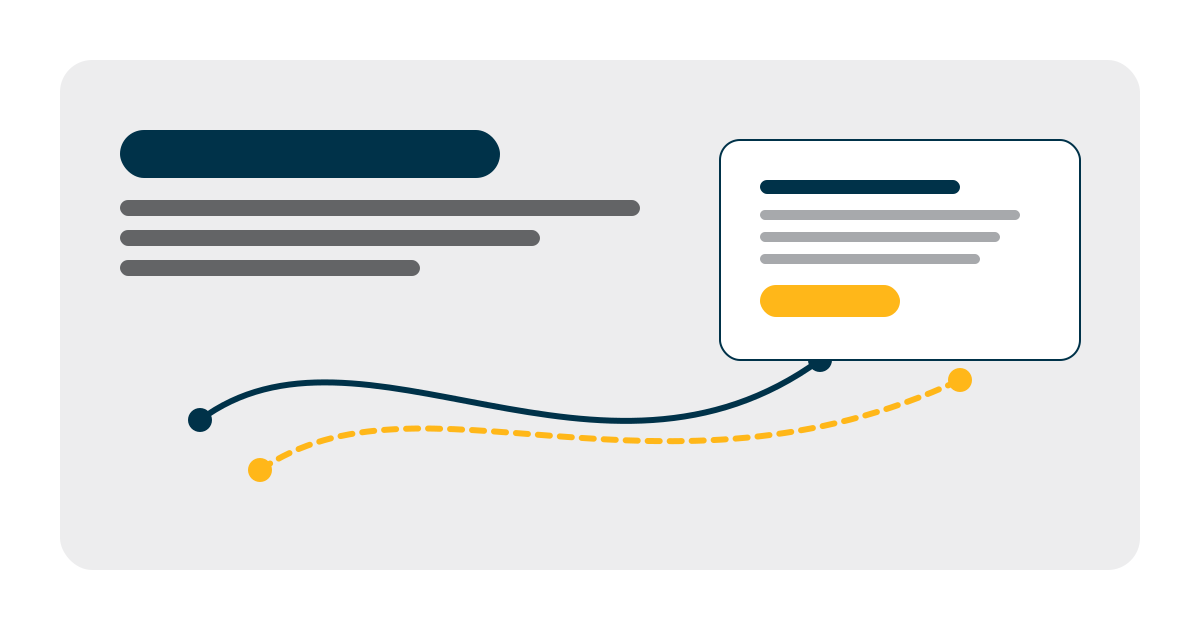
A three-layer routing model and a clear decision cadence keep time-critical freight moving when capacity, weather, or congestion shifts.
- Define primary, contingency, and recovery routes before the load is booked.
- Trigger re-routing based on capacity signals, dwell time, and disruption alerts.
- Standardize decision windows so teams act early instead of reacting late.
Time-critical freight cannot depend on a single plan. When capacity shifts or terminals stall, the fastest answer is the one you already prepared.
Why resilience matters now
Peak congestion, weather volatility, and capacity swings are no longer rare. The result is a need for routing systems that anticipate disruption instead of chasing it. A resilient playbook creates a repeatable path to decisions, so teams move fast without losing control or transparency.
The three-layer routing model
Layer 1: Primary route
The primary route is the most efficient path under normal conditions. It is optimized for on-time performance and cost efficiency while meeting the service level the customer expects.
Layer 2: Contingency route
The contingency route is a pre-approved alternative that maintains the same service level with minimal operational friction. This route should be validated in advance for carrier availability and terminal handling.
Layer 3: Recovery route
The recovery route is a last-resort option that sacrifices cost efficiency to protect the deadline. These routes are often multi-mode and should be activated only when the primary and contingency options are compromised.
Decision checklist
- Confirm service level and required delivery window.
- Validate current capacity for primary and contingency routes.
- Check dwell time at critical transfer points.
- Review disruption alerts for weather, labor, and infrastructure issues.
- Decide within a fixed decision window and document the trigger.
Operational signals to monitor
| Signal | Why it matters | Action trigger |
|---|---|---|
| Capacity utilization | Shows if routing options are still viable | Above 85 percent utilization for 48 hours |
| Dwell time | Indicates terminal congestion or handling delays | Two consecutive dwell reports above baseline |
| Disruption alerts | Flags weather or infrastructure risk | Any level 3 or higher advisory |
How CAP builds guardrails
We treat routing like a controlled system, not a one-off decision. The playbook is paired with a weekly lane review and a standard escalation threshold. That means the team can move quickly without improvising each time.
A routing plan is only as strong as the decision cadence behind it.
Sources
- Bureau of Transportation Statistics - Transportation Services Index
- Federal Aviation Administration - Air Cargo Data
- US Department of Transportation - Supply Chain Resources
FAQ
What is a three-layer routing model?
It is a pre-planned set of primary, contingency, and recovery options that can be activated without reworking the entire shipment plan.
How often should routes be reviewed?
Critical lanes should be reviewed weekly, while low-volatility lanes can be reviewed monthly.
What is the minimum data required for fast reroutes?
At a minimum: capacity status, dwell time, and a disruption alert feed.